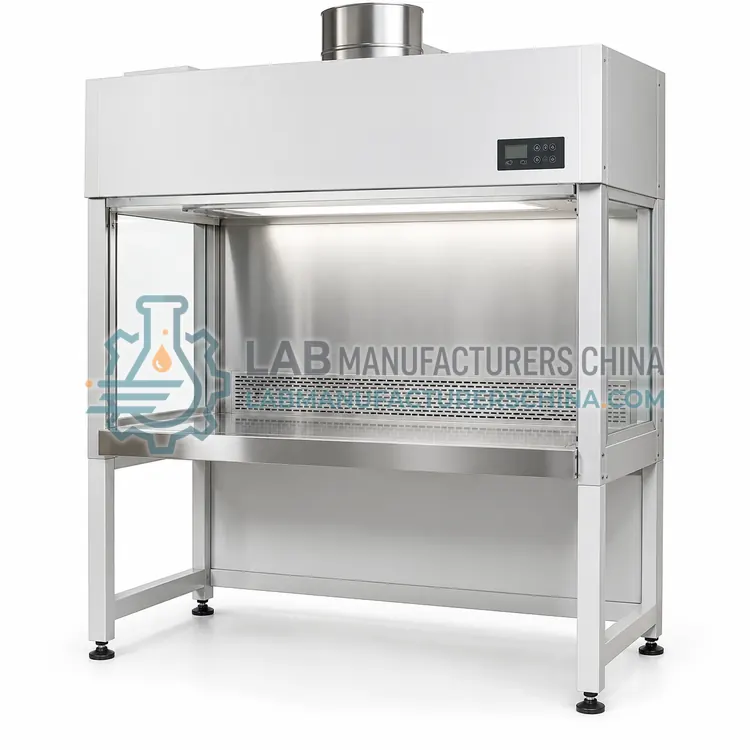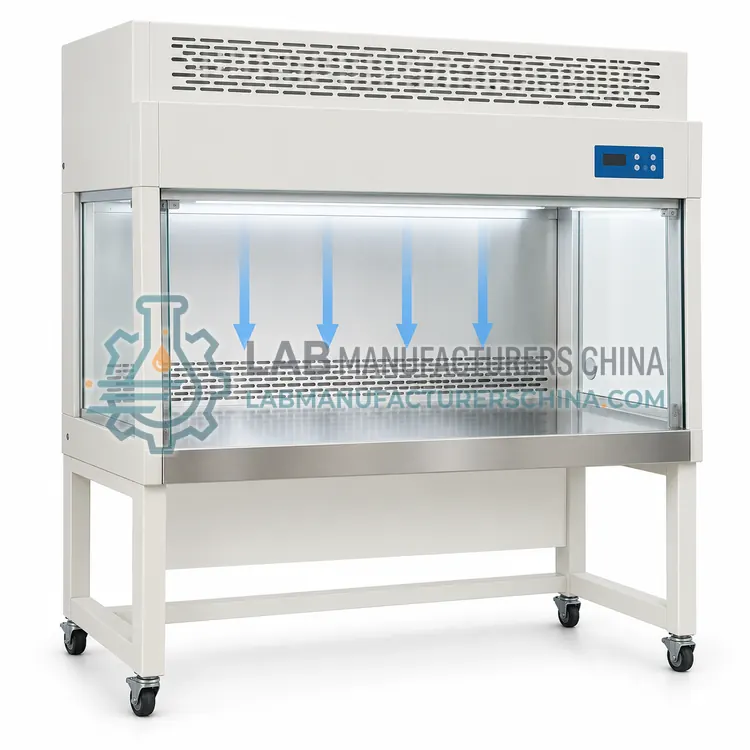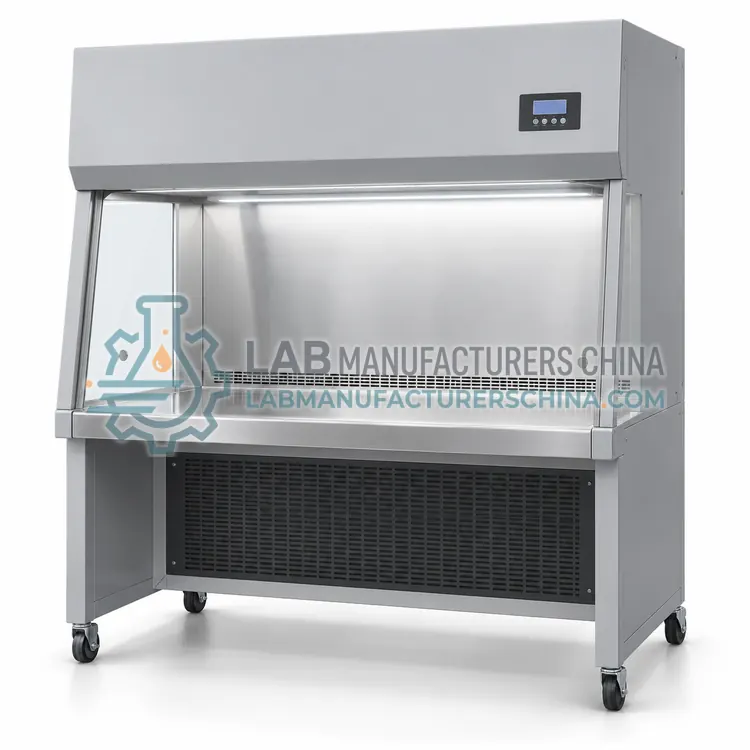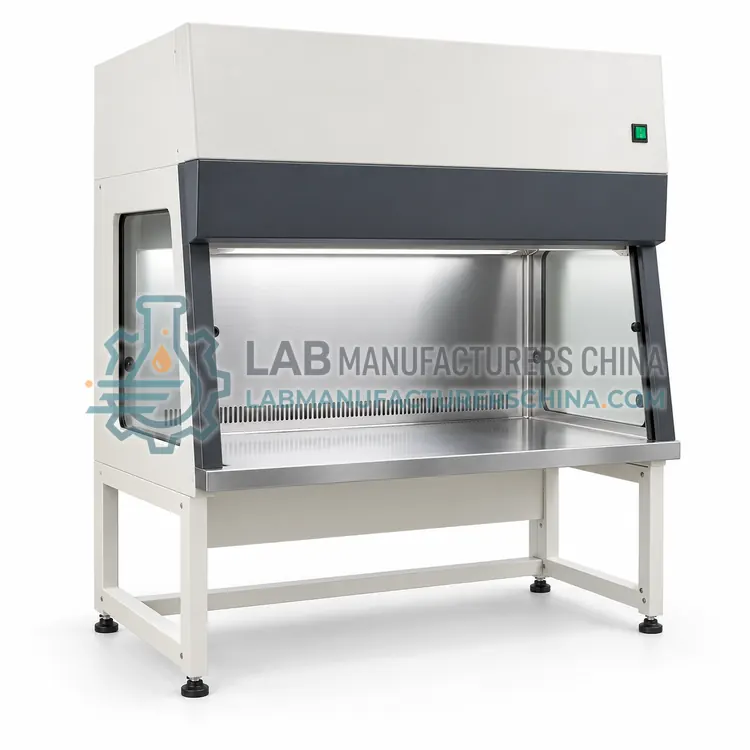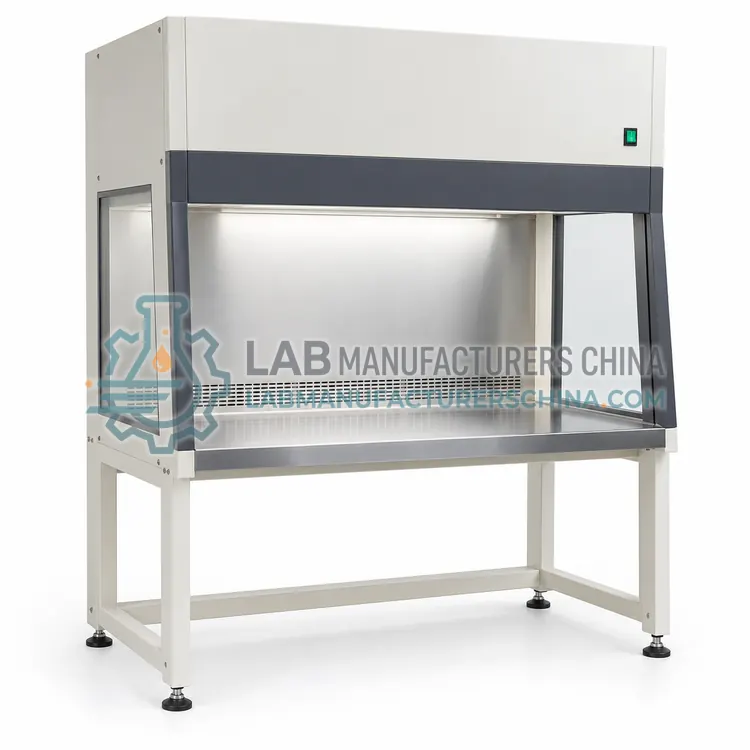
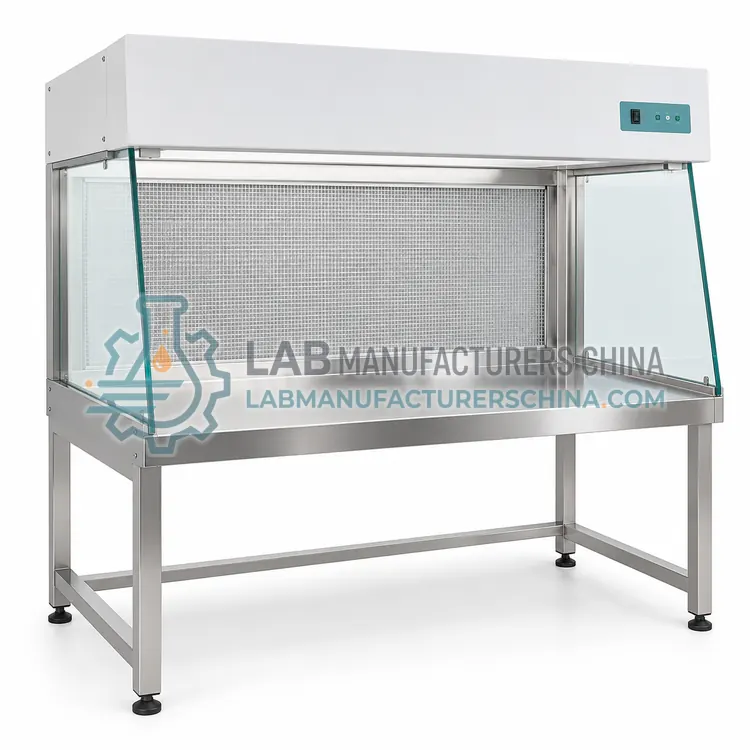
Horizontal Flow Clean Bench
水平流洁净工作台
- SKU CBE-0001
- Clean Benches
- CE (to be confirmed)
- ISO 9001 manufacturing (to be confirmed)
Price on request — FOB / CIF quoted per order
Prices depend on configuration, quantity and destination port.
Key specifications
| Flow direction | Horizontal, rear to front |
|---|---|
| Filter class | HEPA H14, ≥ 99.97 % at 0.3 µm |
| Face velocity | 0.3–0.5 m/s |
| Cleanliness | ISO 5 at work surface |
| Width | 900–1800 mm |
| Work surface | Stainless steel 304 |
Request a quote Download brochure · to be provided
By Lab Manufacturers China Technical TeamLast reviewed Standards: ISO 14644-1 (cleanroom classification), ISO 14644-3 (test methods), IEST-RP-CC002 (unidirectional flow clean-air devices)
What is the Horizontal Flow Clean Bench?
A horizontal flow clean bench supplies HEPA air from a rear grille across the work surface, giving an open, unobstructed clean zone. It suits flat inspection and assembly tasks with clear access.
What is the Horizontal Flow Clean Bench?
A horizontal flow clean bench supplies HEPA air from a rear grille across the work surface, giving an open, unobstructed clean zone. It suits flat inspection and assembly tasks with clear access.
Overview
The bench is usually 900–1800 mm wide with a stainless or laminate surface, and a rear plenum and diffuser deliver a uniform stream at 0.3–0.5 m/s from back to front. Room air is drawn through a prefilter and HEPA H14 filter, and a pressure gauge shows loading. Because the stream crosses the bench, the operator reaches the whole surface with no barrier, which suits display assembly, optical inspection and plating. Air leaves the front to the room in the basic model and can be captured for ducted or recirculating variants. The bench protects the work only, so it must not be used for hazardous aerosols or chemical vapour, and it should be sited away from draughts that would break the laminar stream.
How does it work?
A clean bench supplies filtered air in one direction across an open work surface, so particles generated by the work or carried in the room are swept away from the sample. Room air passes a prefilter and then a HEPA filter rated at least 99.97 % efficient at 0.3 µm, or a ULPA filter at 99.999 %, and a diffuser makes the stream uniform at 0.3–0.5 m/s. Horizontal designs flow from the back of the bench to the front, while vertical designs descend from the top. The open front gives good access but no operator protection, so clean benches are used only for work that produces no hazardous aerosol or chemical vapour. The work zone can reach ISO 5 in a suitable room. Filter loading is shown by pressure, and airflow and filter integrity must be verified, because draughts and obstructions disturb the laminar stream.
What are the key features?
- Rear HEPA supply flowing back to front
- HEPA H14 at 99.97 % for 0.3 µm
- Face velocity 0.3–0.5 m/s across the bench
- Widths 900–1800 mm, open front
- Pressure gauge for filter loading
- Ducted or recirculating options
What are the technical specifications?
A typical horizontal flow clean bench configuration offers flow direction of Horizontal, rear to front, filter class of HEPA H14, ≥ 99.97 % at 0.3 µm, face velocity of 0.3–0.5 m/s, cleanliness of ISO 5 at work surface, width of 900–1800 mm and work surface of Stainless steel 304. Values are indicative of the product class; the exact figures for each configuration are confirmed on the quotation and the calibration documents supplied with the instrument.
Which applications is it used for?
The Horizontal Flow Clean Bench is used in electronic assembly, optical inspection, media plating and component packaging. Across the wider Clean Benches class, laboratories also deploy it for aseptic assembly and inspection, media preparation and plating and electronics and optics work.
Which standards and certifications apply?
Relevant standards and methods include ISO 14644-1 (cleanroom classification), ISO 14644-3 (test methods), IEST-RP-CC002 (unidirectional flow clean-air devices), EN 1822 (HEPA and ULPA filters), EU GMP Annex 1 (sterile manufacturing) and GB 50073 (cleanroom design code). Certification candidates for this model are CE and ISO 9001 manufacturing; each is to be confirmed for the specific configuration before shipment, and certificates are supplied only where they have been issued.
Site the bench away from doors, air diffusers and traffic, because draughts above about 0.2 m/s break the laminar stream. Verify filter integrity and face velocity at installation and at least annually, changing prefilters every 3–6 months. Keep the work surface free of large items, place objects to the side rather than in front of the filter face, and do not block the air exit. Clean with compatible agents, and avoid aerosols that would load the filter. Never use a clean bench for hazardous aerosols or volatile chemicals, since the open front offers no protection. Record requalification and filter changes, and confirm that the recirculated or ducted exhaust suits the room and any local rules.
How do I select the right Horizontal Flow Clean Bench?
Choose horizontal flow for flat work needing clear access across the bench. Confirm width, work height and exhaust arrangement. RFQ: width, filter class, exhaust option, work surface material and cleanliness target. Provide the required cleanliness class.
How does it compare with other Clean Benches variants?
Choose the flow direction first: horizontal for flat work needing clear access, vertical for tall items and where downward flow is preferred. Then decide the exhaust arrangement: ducted where exhaust must leave the room, recirculating where no duct is available and the work is clean. Select the construction: powder-coated steel for general use, and stainless steel for aseptic, GMP or high-humidity environments with cleanable surfaces and documentation. Choose filter class for the cleanliness target, HEPA H14 for ISO 5 and ULPA for ISO 4 or better, and match width and working height to the equipment. Confirm the bench does not need to protect the operator, and if it does, specify a biosafety cabinet or fume hood instead. Verify face velocity, filter integrity and particle counts at commissioning, and plan requalification.
Full specifications
| Flow direction | Horizontal, rear to front |
|---|---|
| Filter class | HEPA H14, ≥ 99.97 % at 0.3 µm |
| Face velocity | 0.3–0.5 m/s |
| Cleanliness | ISO 5 at work surface |
| Width | 900–1800 mm |
| Work surface | Stainless steel 304 |
| Exhaust | Room, ducted or recirculating |
| Pre-filter | Washable, G4 |
| Noise level | ≤ 62 dB(A) |
| Power supply | 220 V, 50 Hz, 150–350 W |
Indicative values for this product class. Final specifications are confirmed on the quotation and in the calibration documents supplied with the instrument.
Applications
- Electronic assembly
- Optical inspection
- Media plating
- Component packaging
Key features
- Rear HEPA supply flowing back to front
- HEPA H14 at 99.97 % for 0.3 µm
- Face velocity 0.3–0.5 m/s across the bench
- Widths 900–1800 mm, open front
- Pressure gauge for filter loading
- Ducted or recirculating options
Frequently asked questions about Horizontal Flow Clean Bench
Flat work such as assembly, inspection, plating and packaging where the operator must reach across the surface. Tall items are better handled in a vertical flow bench.
With a HEPA H14 filter, correct face velocity and an appropriate room, the work surface normally reaches ISO 5. Confirm by particle counting under ISO 14644-3 at commissioning.
Draughts above about 0.2 m/s from doors, windows or diffusers, and large objects placed in front of the filter face. Site carefully and keep the bench clear to hold containment of clean air.
It protects the work and samples from particles and microbes by supplying HEPA or ULPA filtered air across the surface. It does not protect the operator, so hazardous aerosols and chemical vapour are not contained.
Horizontal flow crosses the bench from back to front and gives clear access for flat work. Vertical flow descends from the top, suits taller items and keeps particles from settling onto open vessels from above.
For aseptic, GMP or high-humidity work where cleanable, documented surfaces are needed. Powder-coated steel is adequate for general inspection and assembly, and costs less.
Related models