Cleanroom Shoe Covers and Boots
洁净室鞋套和靴套
- SKU CAC-0005
- Cleanroom Accessories
- CE (to be confirmed)
- ISO 9001 manufacturing (to be confirmed)
Price on request — FOB / CIF quoted per order
Prices depend on configuration, quantity and destination port.
Key specifications
| Material | PP, PE, CPE or polyester |
|---|---|
| Height | Ankle 150 mm or knee 400–450 mm |
| Sole | Anti-slip PVC or conductive rubber |
| Resistance to ground | 105–109 ohm (ESD types) |
| Sizes | 35–48 |
| Packaging | 100–300 pairs per bag |
Request a quote Download brochure · to be provided
By Lab Manufacturers China Technical TeamLast reviewed Standards: IEST-RP-CC003 (garment system considerations), IEST-RP-CC004 (evaluating wiping materials), IEST-RP-CC005 (cleanroom gloves)
What is the Cleanroom Shoe Covers and Boots?
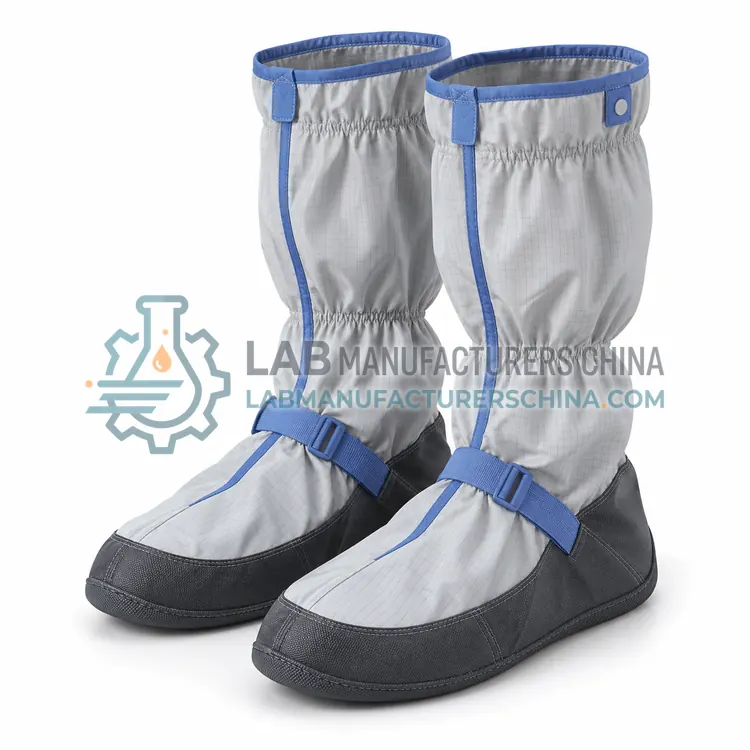
Cleanroom shoe covers and boots are disposable or reusable footwear barriers that contain contamination from street shoes or restrict floor-level particle shedding. They are used at gowning entrances and inside ISO 5–8 areas.
What is the Cleanroom Shoe Covers and Boots?
Cleanroom shoe covers and boots are disposable or reusable footwear barriers that contain contamination from street shoes or restrict floor-level particle shedding. They are used at gowning entrances and inside ISO 5–8 areas.
Overview
Disposable shoe covers are made from polypropylene, polyethylene or CPE with elastic ankle and slip-resistant soles, and come in ankle-height or knee-high boot styles. Reusable boots are made from polyester with conductive threads and PVC or conductive rubber soles, providing ESD resistance of 105–109 ohm. Sizes typically fit shoe sizes from 35 to 48. Disposable covers are supplied in clean-packed bags of 100 to 300 pairs, and may include a conductive strip for ESD control. Sterile options are available for aseptic areas. Boots should be replaced or cleaned after use and, for reusable types, cleaned or laundered on a regular schedule. Non-conductive soles should not be used in ESD-protected areas.
How does it work?
Cleanroom accessories work by limiting the generation, transfer and retention of contaminants. Garments and gloves act as barriers against skin flakes, hair and fibres shed by personnel, using tightly woven low-linting fabrics with pore sizes small enough to retain particles of 0.5 micrometres or larger. Wipers absorb and remove liquids and particles using continuous-filament polyester or microfibre knit with sealed edges, so fibres do not release. Tacky mats use a pressure-sensitive adhesive layer that captures particles from shoe soles and cart wheels as they walk across. Shoe covers and boots contain floor contamination. Materials are selected for low particle shedding, low ionic and extractable residues, and compatibility with disinfectants, with cleaning and packaging done in controlled environments.
What are the key features?
- Polypropylene, PE or CPE disposable shoe covers
- Reusable polyester boots with conductive threads
- Slip-resistant and conductive sole options
- Ankle-height or knee-high styles
- Clean-packed in bags of 100–300 pairs
- Sterile options for aseptic areas
What are the technical specifications?
A typical cleanroom shoe covers and boots configuration offers material of PP, PE, CPE or polyester, height of Ankle 150 mm or knee 400–450 mm, sole of Anti-slip PVC or conductive rubber, resistance to ground of 105–109 ohm (ESD types), sizes of 35–48 and packaging of 100–300 pairs per bag. Values are indicative of the product class; the exact figures for each configuration are confirmed on the quotation and the calibration documents supplied with the instrument.
Which applications is it used for?
The Cleanroom Shoe Covers and Boots is used in gowning entrances, electronics assembly, pharmaceutical production and hospital pharmacy. Across the wider Cleanroom Accessories class, laboratories also deploy it for pharmaceutical manufacturing, semiconductor fabs and medical-device assembly.
Which standards and certifications apply?
Relevant standards and methods include IEST-RP-CC003 (garment system considerations), IEST-RP-CC004 (evaluating wiping materials), IEST-RP-CC005 (cleanroom gloves), ISO 14644-5 (cleanroom operations), ASTM D6319 (nitrile examination gloves) and EU GMP Annex 1 (sterile manufacturing). Certification candidates for this model are CE and ISO 9001 manufacturing; each is to be confirmed for the specific configuration before shipment, and certificates are supplied only where they have been issued.
Store accessories in sealed bags or cabinets in the clean area, away from moisture and sunlight, and follow first-in-first-out rotation with expiry dates. Verify supplier certificates and lot test data on receipt, including particle counts, bioburden and sterility for sterile items. Set garment laundering cycles and inspect for tears and zipper damage. Change gloves often, for example every 2 hours or when contaminated, and never reuse disposable items. Replace tacky mat sheets when soiled, and follow a documented schedule. Incorporate accessories into gowning SOPs and training, and keep records for GMP or ISO 14644 audits.
How do I select the right Cleanroom Shoe Covers and Boots?
Choose disposable covers for low-traffic or visitor entry and reusable ESD boots for permanent staff in ISO 5–7 areas. RFQ: height, ESD need, sole type, sterile option, size range and packaging. Also confirm sizing. Verify lot test data too.
How does it compare with other Cleanroom Accessories variants?
Start from the room class and the contamination risk of the process. ISO 7–8 areas often use polyester garments and nitrile gloves, while ISO 5 sterile areas need sterile, double-gloved garments in low-particle fabrics. Check particle shedding, often tested to IEST-RP-CC003 and IEST-RP-CC004, extractable ions, absorbency and sterility assurance level when sterile is required. For gloves, compare thickness, length, AQL and chemical resistance. For wipers, match fibre type, edge sealing and solvent compatibility. Consider packaging, such as double bagging, and lot traceability. Compare sizes, cost per use and laundering cycles for reusable garments, and ensure items are compatible with ESD requirements in electronics.
Full specifications
| Material | PP, PE, CPE or polyester |
|---|---|
| Height | Ankle 150 mm or knee 400–450 mm |
| Sole | Anti-slip PVC or conductive rubber |
| Resistance to ground | 105–109 ohm (ESD types) |
| Sizes | 35–48 |
| Packaging | 100–300 pairs per bag |
| Sterile option | Gamma irradiated, SAL 10-6 |
| Reusable life | Disposable or 50–100 cycles |
| Cleanroom class suitability | ISO 5–8 |
| Colour | Blue, white or grey |
Indicative values for this product class. Final specifications are confirmed on the quotation and in the calibration documents supplied with the instrument.
Applications
- Gowning entrances
- Electronics assembly
- Pharmaceutical production
- Hospital pharmacy
Key features
- Polypropylene, PE or CPE disposable shoe covers
- Reusable polyester boots with conductive threads
- Slip-resistant and conductive sole options
- Ankle-height or knee-high styles
- Clean-packed in bags of 100–300 pairs
- Sterile options for aseptic areas
Frequently asked questions about Cleanroom Shoe Covers and Boots
Shoe covers reduce transfer but are best combined with tacky mats and floor cleaning. They are a barrier for entry, not a substitute for dedicated cleanroom shoes.
In electronics assembly and ESD-protected areas, yes. Conductive soles and threads give a resistance of 105–109 ohm to ground, tested to IEC 61340-5-1.
Replace disposable covers after each entry and reusable boots when soles are worn or after the validated cleaning cycle count. Inspect for tears and loss of conductivity.
Cleanroom accessories are consumable and supporting items, such as wipers, gloves, coveralls, tacky mats and shoe covers, that limit particle and microbial contamination in classified rooms by controlling shedding and capturing contaminants at entry points.
Select by room class, chemical exposure and sterility needs. Nitrile is common for low shedding and chemical resistance, with thickness 0.08–0.15 mm and length 240–300 mm. Check AQL, extractables and whether gamma sterilization is needed.
Change gloves when they are torn, contaminated or after a defined time, commonly every 1–2 hours in critical areas. Follow the facility gowning SOP and change before entering a higher classification area.
Related models