Automated Colony Picking System
自动挑克隆系统
- SKU BIA-0005
- Biotech Automation
- CE (to be confirmed)
- ISO 9001 manufacturing (to be confirmed)
- IEC 61010-1 compliance (to be confirmed)
Price on request — FOB / CIF quoted per order
Prices depend on configuration, quantity and destination port.
Key specifications
| Picking throughput | 1,000–20,000 colonies per day |
|---|---|
| Plate formats | Petri dishes to bioassay trays |
| Detection | Color, size, circularity, fluorescence |
| Picking head | Pin tool, needle or disposable tip |
| Destination formats | 96, 384-well plates, membranes |
| Sterilization | Flaming, washing or UV |
Request a quote Download brochure · to be provided
By Lab Manufacturers China Technical TeamLast reviewed Standards: ISO 9001, ISO 13485, 21 CFR Part 11
What is the Automated Colony Picking System?
An automated colony picking system images agar plates, identifies colonies and transfers selected ones to wells or membranes with a robotic head. It is used in cloning, strain engineering and library construction.
What is the Automated Colony Picking System?
An automated colony picking system images agar plates, identifies colonies and transfers selected ones to wells or membranes with a robotic head. It is used in cloning, strain engineering and library construction.
Overview
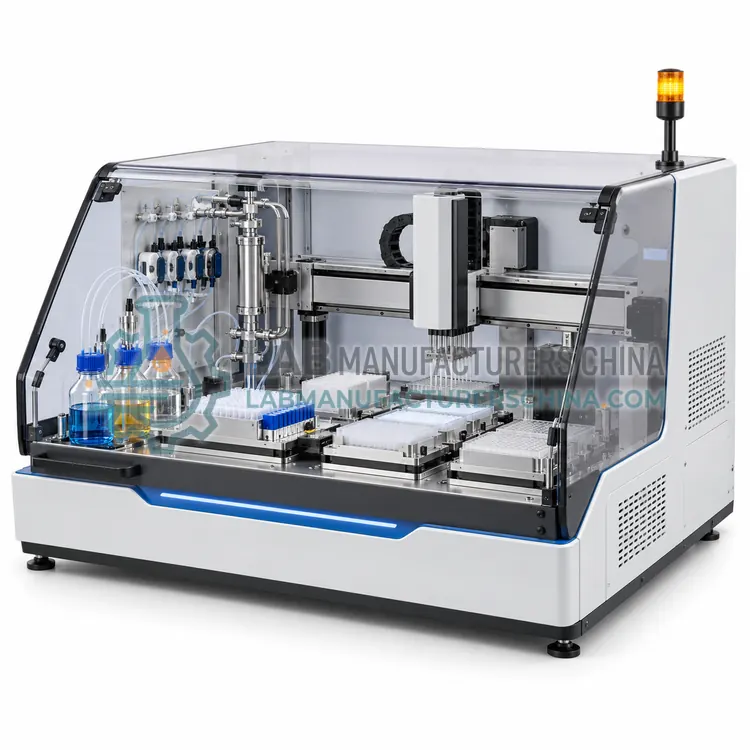
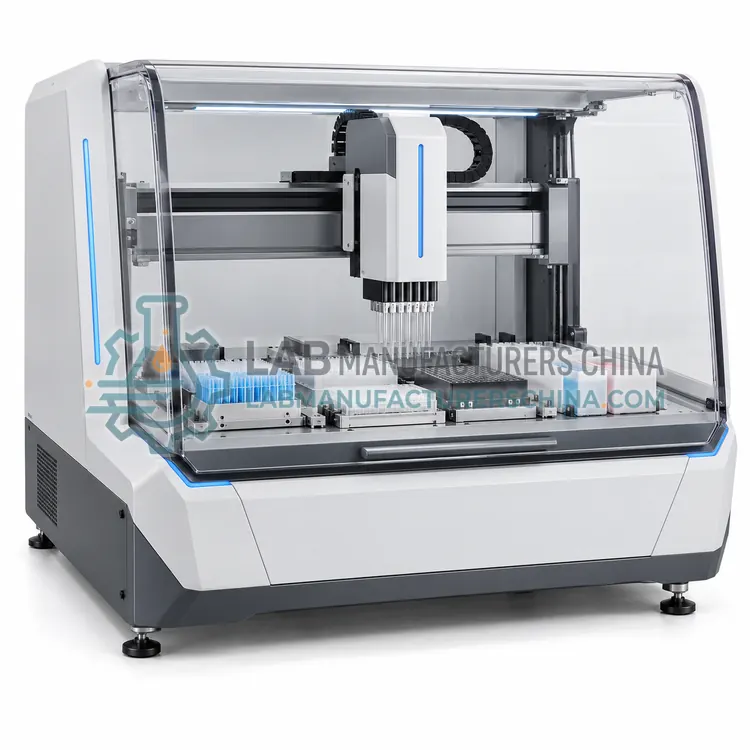
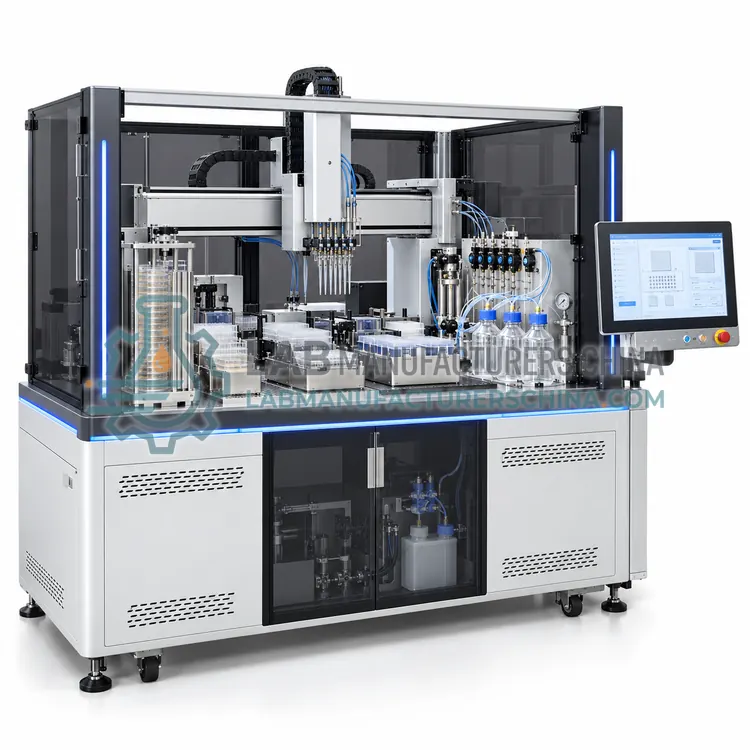
An automated colony picking system combines imaging with a picking head to move colonies from agar to a destination. A camera images the plate, and software detects colonies by size, color, circularity or fluorescence, letting the operator set selection criteria. The picking head, fitted with a pin tool, needle or disposable tip, touches the selected colony, then transfers it to a multiwell plate, a membrane or an agar grid for re-streaking. Sterilization between picks by flaming, washing or ultraviolet light prevents cross-contamination. Barcode identification links the source plate, the colony coordinates and the destination well, giving traceability for downstream screening or sequencing. Systems handle sizes from petri dishes to large bioassay trays and pick from a few colonies to tens of thousands per day, with picking accuracy and sterility as key performance measures.
How does it work?
Biotech automation systems replace manual handling with mechanical motion controlled by software. A liquid handler aspirates and dispenses precise volumes with air-displacement or positive-displacement pipettes, using disposable tips or fixed probes washed between steps. Robotic arms or grippers move microplates, tube racks and labware between modules, while sensors and teach points define positions. Scheduling software, sometimes called a scheduler or method editor, coordinates the modules, resolves resource conflicts and tracks each plate and sample. Detection modules add readers, imagers or thermal cyclers so that assays run without manual transfer. Air-displacement pipetting, tip-touch, liquid-level detection and calibrated pumps determine accuracy and precision, while deck design, labware definitions and error recovery determine reliability during long unattended runs.
What are the key features?
- Imaging with size, color and fluorescence colony detection
- Operator-defined selection criteria
- Robotic picking head with pins, needles or disposable tips
- Sterilization between picks to prevent cross-contamination
- Barcode traceability from colony to destination well
What are the technical specifications?
A typical automated colony picking system configuration offers picking throughput of 1,000–20,000 colonies per day, plate formats of Petri dishes to bioassay trays, detection of Color, size, circularity, fluorescence, picking head of Pin tool, needle or disposable tip, destination formats of 96, 384-well plates, membranes and sterilization of Flaming, washing or UV. Values are indicative of the product class; the exact figures for each configuration are confirmed on the quotation and the calibration documents supplied with the instrument.
Which applications is it used for?
The Automated Colony Picking System is used in cloning and library construction, strain engineering and mutant screening, functional metagenomics and antibiotic or enzyme screening. Across the wider Biotech Automation class, laboratories also deploy it for high-throughput screening, genomics and molecular biology workflows and cell line development and clone screening.
Which standards and certifications apply?
Relevant standards and methods include ISO 9001, ISO 13485, 21 CFR Part 11, EU GMP Annex 11, ISO 15189, IEC 61010-1 and ANSI/SLAS microplate standards. Certification candidates for this model are CE, ISO 9001 manufacturing and IEC 61010-1 compliance; each is to be confirmed for the specific configuration before shipment, and certificates are supplied only where they have been issued.
Qualify the system against your methods with accuracy and precision studies at the volumes used, and repeat them after major service. Keep labware definitions current, because a changed plate height or well geometry causes collisions or poor pipetting. Train operators in method editing, teach-point adjustment and error recovery, and restrict who can change methods. Monitor tip and consumable supply, and clean probes, grippers and optics on schedule. For regulated workflows, control software and method versions, review audit trails and confirm that barcodes and results transfer correctly to the laboratory information system. Confirm that the installation meets the manufacturer's requirements for bench stability, power and, where relevant, ventilation and IEC 61010-1.
How do I select the right Automated Colony Picking System?
Choose a colony picker from the plate sizes, daily colony count and selection criteria you need. In an RFQ specify imaging and detection options, picking throughput, head type, sterilization method, destination formats and the traceability and data export features required.
How does it compare with other Biotech Automation variants?
Begin with the workflow you want to automate and the number of samples per day. Choose pipetting channels and volume range from the assay, and confirm accuracy and precision at the low volumes you actually use. For plate movement, define the number of plates in play and the storage and incubation needs, and decide whether a standalone liquid handler, a plate robot or a full workcell is required. For screening, confirm detection compatibility and the ability to run kinetic assays. For colony picking, check the target size, sterility and picking throughput. Across the category, evaluate deck capacity, labware support, scheduling flexibility, integration with readers and incubators, error handling, barcode tracking and the software traceability and validation you need.
Full specifications
| Picking throughput | 1,000–20,000 colonies per day |
|---|---|
| Plate formats | Petri dishes to bioassay trays |
| Detection | Color, size, circularity, fluorescence |
| Picking head | Pin tool, needle or disposable tip |
| Destination formats | 96, 384-well plates, membranes |
| Sterilization | Flaming, washing or UV |
| Picking accuracy | ±0.1–0.3 mm |
| Traceability | Barcode linked source and destination |
Indicative values for this product class. Final specifications are confirmed on the quotation and in the calibration documents supplied with the instrument.
Applications
- Cloning and library construction
- Strain engineering and mutant screening
- Functional metagenomics
- Antibiotic or enzyme screening
Key features
- Imaging with size, color and fluorescence colony detection
- Operator-defined selection criteria
- Robotic picking head with pins, needles or disposable tips
- Sterilization between picks to prevent cross-contamination
- Barcode traceability from colony to destination well
Frequently asked questions about Automated Colony Picking System
Software detects candidate colonies in the image and applies criteria such as size range, color, roundness or fluorescence intensity that the operator sets. Colonies meeting the criteria are ranked, and the operator can review and edit the selection list before picking.
The picking tool is sterilized between picks by flaming, washing or ultraviolet light, and the instrument records the sterilization cycle. Correct maintenance of heads, pins and tips, together with operator confirmation of sterilization, keeps library and screening results clean.
Systems range from compact models that handle standard 90 millimetre petri dishes to large platforms that accept rectangular bioassay trays holding many colonies per tray. The choice depends on the number of colonies per screening round and available incubation space.
It performs repetitive laboratory tasks such as pipetting, plate movement, screening and colony picking with robots and software. Biopharmaceutical, genomics and screening laboratories use it to raise throughput, reduce human error and keep results consistent across large sample numbers.
A liquid handler moves liquids with pipetting channels on a single deck. A workcell adds robotic arms, plate storage, incubators, readers and other modules so that a whole assay runs unattended, which requires more integration and scheduling software.
Accuracy and precision are checked with gravimetric or dye-based tests across the volume range, especially at the smallest volumes used. Results are compared with acceptance criteria, and the checks are repeated after service, after major deck changes and at defined intervals.
Related models