Serology Reagent and Antisera Refrigerator
血清学试剂与抗血清冷藏箱
- SKU BBR-0005
- Blood Bank Refrigerators
- CE (to be confirmed)
- ISO 9001 manufacturing (to be confirmed)
- ISO 13485 manufacturing (to be confirmed)
Price on request — FOB / CIF quoted per order
Prices depend on configuration, quantity and destination port.
Key specifications
| Temperature range | 2–8 °C |
|---|---|
| Net volume | 50–250 L |
| Temperature stability | ±1 K around set point |
| Temperature uniformity | ≤ 2.5 K |
| Noise level | ≤ 45 dB(A) |
| Cooling method | Forced-air or static with fan assist |
Request a quote Download brochure · to be provided
By Lab Manufacturers China Technical TeamLast reviewed Standards: AABB Standards for Blood Banks and Transfusion Services, Council of Europe Guide to the Preparation, Use and Quality Assurance of Blood Components, ISO 15189
What is the Serology Reagent and Antisera Refrigerator?
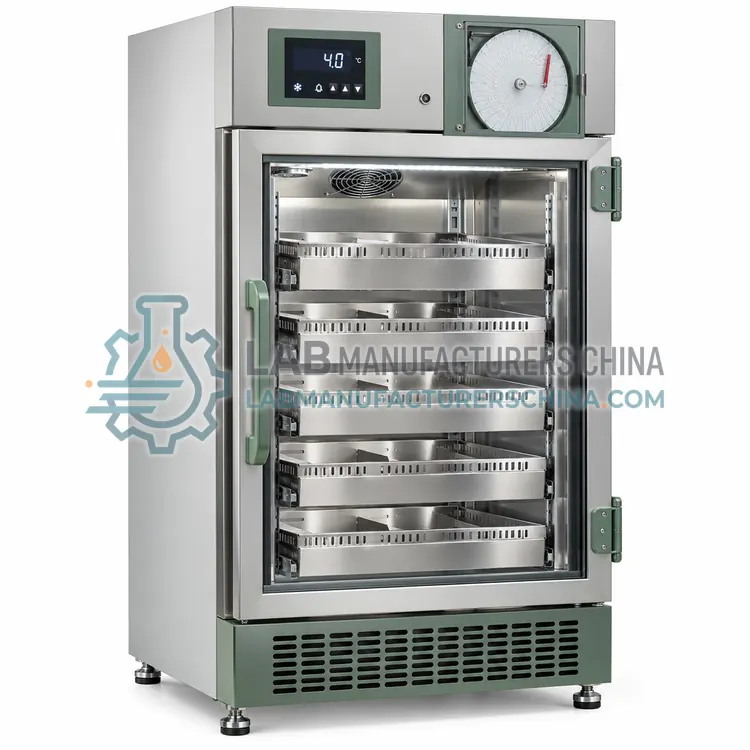
A compact 2–8 °C refrigerator dedicated to reagent red cells, antisera, antibody-screening panels and test kits used in blood grouping and cross-matching. It protects reagents from freezing, limits temperature swings during frequent access, and keeps them segregated from patient samples and units.
What is the Serology Reagent and Antisera Refrigerator?
A compact 2–8 °C refrigerator dedicated to reagent red cells, antisera, antibody-screening panels and test kits used in blood grouping and cross-matching. It protects reagents from freezing, limits temperature swings during frequent access, and keeps them segregated from patient samples and units.
Overview
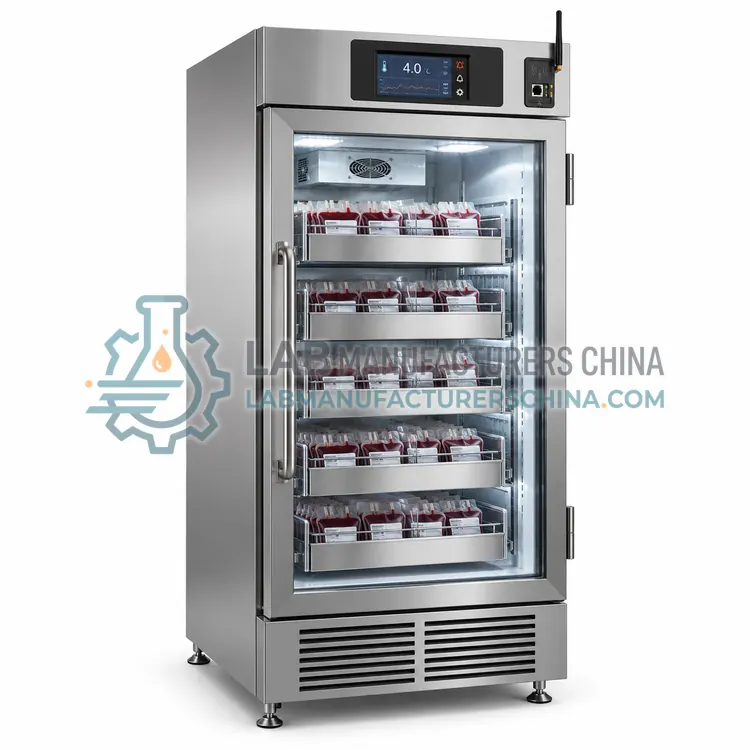
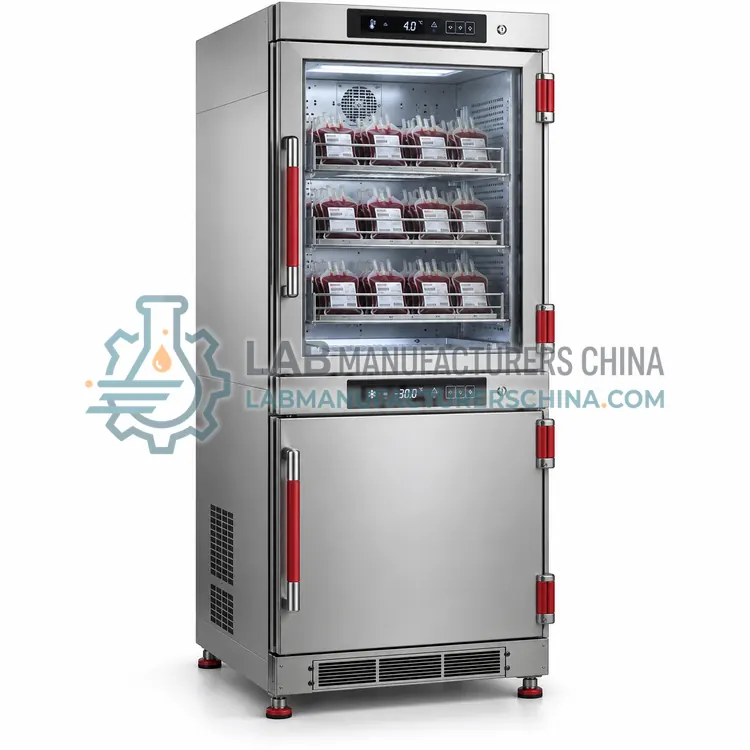
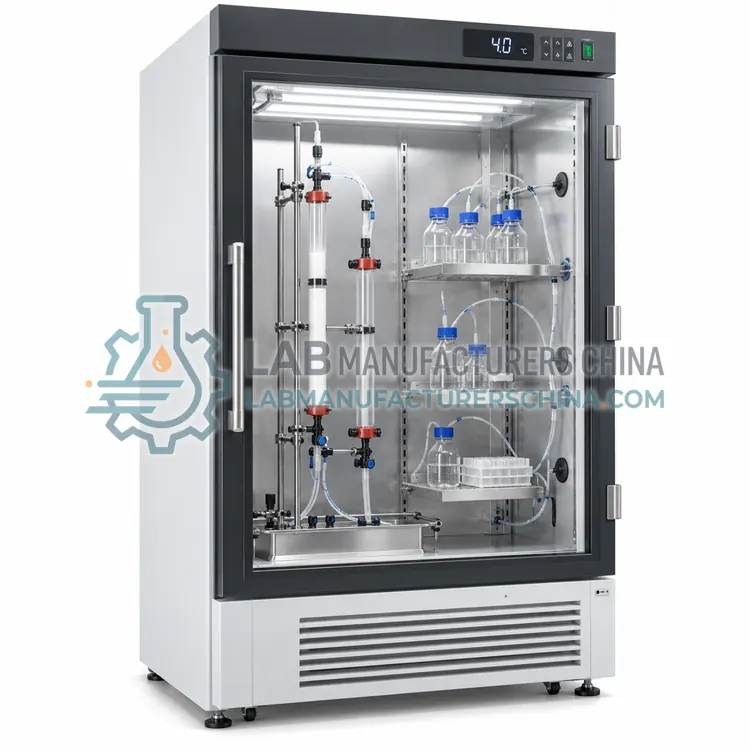
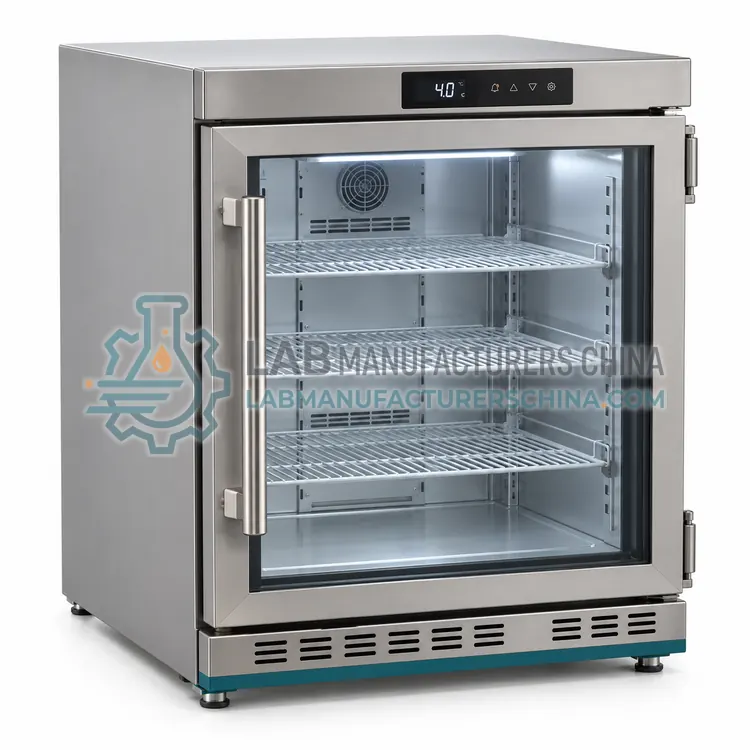
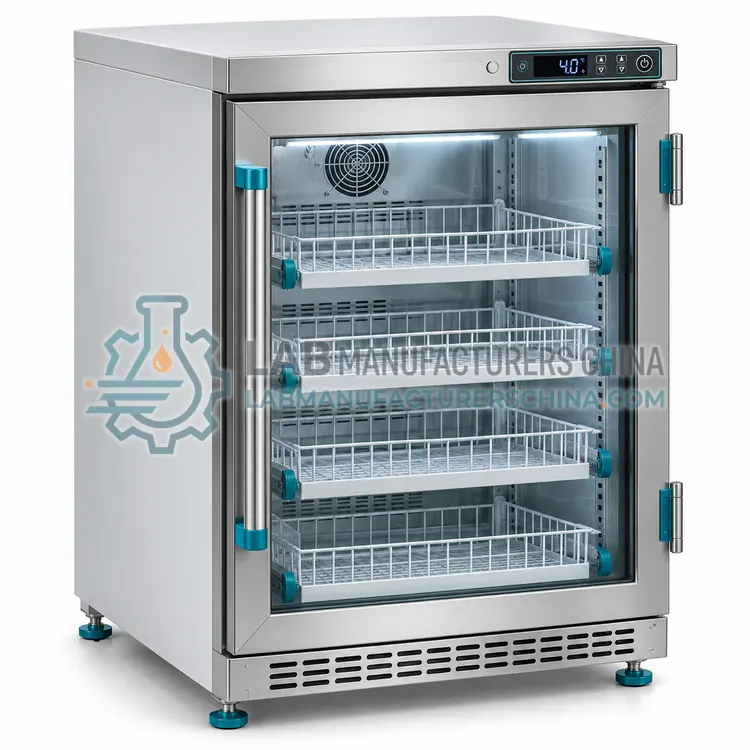
Reagent red cells and antisera are sensitive to freezing and to repeated warming, so this variant pairs a small 50–250 L cabinet with very stable control. A benchtop or undercounter body holds the set point within ±1 K, and a slow-acting buffered probe avoids cycling from door openings. Glass doors allow reagents to be selected without letting warm air in, while adjustable shelves and small drawers hold dropper vials, gel cards and microplates. Low-noise operation is important in a working laboratory. A separate refrigerator for reagents prevents contamination from sample tubes and supports traceability of lot numbers. Alarms, optional data output and a lock are standard. Some models include an interior light and a removable tray for spill containment.
How does it work?
A laboratory blood bank refrigerator uses a vapour-compression circuit with forced-air circulation to hold a narrow temperature band. The cabinet has PU insulation, ducted shelves and a microprocessor controller that reads a control probe and cycles the compressor. A second, independent probe, often buffered in glycol, drives a separate alarm circuit with battery backup so that a control failure cannot go unnoticed. A chart recorder or electronic logger produces a continuous record. Air ducting and fan placement minimise cold spots near the evaporator to avoid freezing red cells and haemolysis. Units for samples and reagents can use a simpler undercounter design, while those for transfusion units need tighter uniformity, recording and validated alarm performance.
What are the key features?
- Stable control within about ±1 K around the set point
- Glass door for selecting reagents without warm air ingress
- Small drawers and adjustable shelves for vials, gel cards and microplates
- Low-noise operation suited to the working laboratory
- Removable tray for spill containment and cleaning
What are the technical specifications?
A typical serology reagent and antisera refrigerator configuration offers temperature range of 2–8 °C, net volume of 50–250 L, temperature stability of ±1 K around set point, temperature uniformity of ≤ 2.5 K, noise level of ≤ 45 dB(A) and cooling method of Forced-air or static with fan assist. Values are indicative of the product class; the exact figures for each configuration are confirmed on the quotation and the calibration documents supplied with the instrument.
Which applications is it used for?
The Serology Reagent and Antisera Refrigerator is used in blood grouping reagents, antibody screening panels, gel card storage and immunohaematology laboratories. Across the wider Blood Bank Refrigerators class, laboratories also deploy it for retained patient samples, red cell storage and transfusion reagents.
Which standards and certifications apply?
Relevant standards and methods include AABB Standards for Blood Banks and Transfusion Services, Council of Europe Guide to the Preparation, Use and Quality Assurance of Blood Components, ISO 15189, IEC 61010-2-011 and IEC 61010-1. Certification candidates for this model are CE, ISO 9001 manufacturing and ISO 13485 manufacturing; each is to be confirmed for the specific configuration before shipment, and certificates are supplied only where they have been issued.
Install on a level floor with the clearance stated in the manual, away from heat sources, and allow the cabinet to stabilise before loading. Perform installation, operational and performance qualification, including temperature mapping and alarm challenge tests, and repeat after relocation or major repair. Calibrate probes and recorders at least yearly against traceable references. Clean condensers, check gaskets and test battery backups on schedule. Keep records of temperatures, alarms and corrective actions as required by your accreditation body and transfusion regulator.
How do I select the right Serology Reagent and Antisera Refrigerator?
Select this refrigerator when reagents must be kept apart from samples and units. Specify volume, noise limit, door type, drawer layout and data output. Choose the larger sample or blood-unit models if you need a recorder, independent alarm probe or high-capacity storage for daily work.
How does it compare with other Blood Bank Refrigerators variants?
Decide first what will be stored. Samples and reagents suit 2–8 °C undercounter or benchtop units, red cell units need 2–6 °C upright cabinets with chart recorder and independent alarm, and plasma needs a freezer or a combined cabinet. Compare temperature uniformity (2 K or better for units), recording method, battery duration and alarm contacts. If several cabinets are operated, choose remote monitoring with audit trail. Match capacity to peak stock and allow for growth. Check that the ambient range and power supply suit your laboratory, and ask for mapping data from the manufacturer.
Full specifications
| Temperature range | 2–8 °C |
|---|---|
| Net volume | 50–250 L |
| Temperature stability | ±1 K around set point |
| Temperature uniformity | ≤ 2.5 K |
| Noise level | ≤ 45 dB(A) |
| Cooling method | Forced-air or static with fan assist |
| Refrigerant | R600a |
| Shelves and drawers | 2–4 adjustable, small drawers optional |
| Alarms | High/low temperature, door ajar |
| Power supply | 220–240 V, 50 Hz |
Indicative values for this product class. Final specifications are confirmed on the quotation and in the calibration documents supplied with the instrument.
Applications
- Blood grouping reagents
- Antibody screening panels
- Gel card storage
- Immunohaematology laboratories
Key features
- Stable control within about ±1 K around the set point
- Glass door for selecting reagents without warm air ingress
- Small drawers and adjustable shelves for vials, gel cards and microplates
- Low-noise operation suited to the working laboratory
- Removable tray for spill containment and cleaning
Frequently asked questions about Serology Reagent and Antisera Refrigerator
Separation limits cross-contamination from sample tubes, avoids accidental use of a sample as a reagent and supports lot traceability. It also lets reagent storage conditions be controlled more tightly without affecting sample handling.
Yes, if the cabinet has cold spots below 0 °C near the evaporator or if the set point drifts. Mapping the cabinet and avoiding contact with the rear wall or outlet reduces the risk. Discard any reagent that appears to have frozen.
It depends on throughput. Reagents for grouping, screening panels and gel cards for a small hospital usually fit within 100–200 L, while a large reference laboratory may need several cabinets. Audit current stock and lot rotation before choosing a size.
It is a temperature-controlled cabinet for blood samples, transfusion reagents or red cell units, with tight control, independent alarms and records. Laboratory versions range from undercounter sample refrigerators to upright cabinets for blood units.
Red cell components are stored at 2–6 °C, and samples and reagents are usually held at 2–8 °C. Follow the range set by your national blood transfusion service, because details differ between jurisdictions and products.
A blood bank unit has a narrower 2–6 °C range, better uniformity, a continuous recorder and an independent alarm with battery backup. Pharmacy units usually target 2–8 °C and may have simpler monitoring, so they are not interchangeable for blood units.
Related models