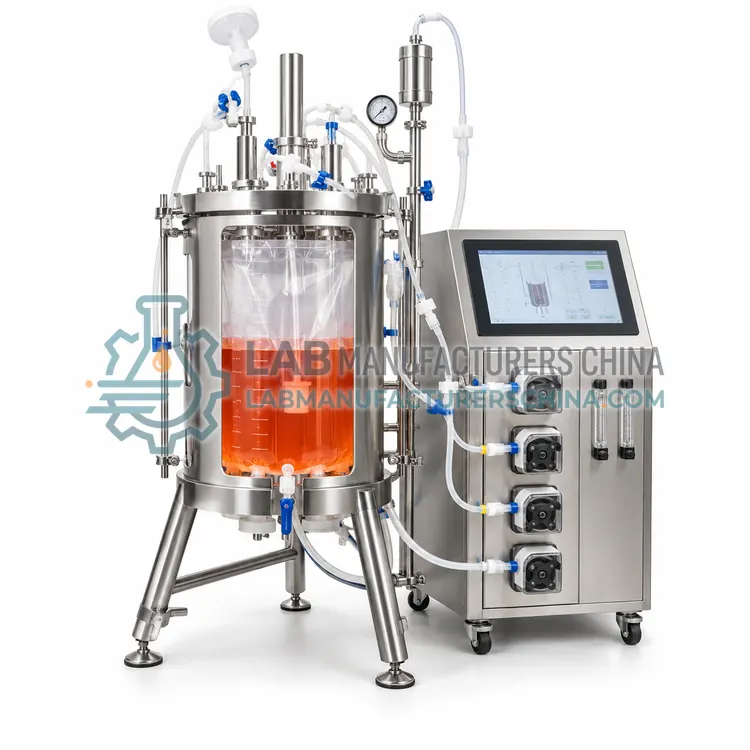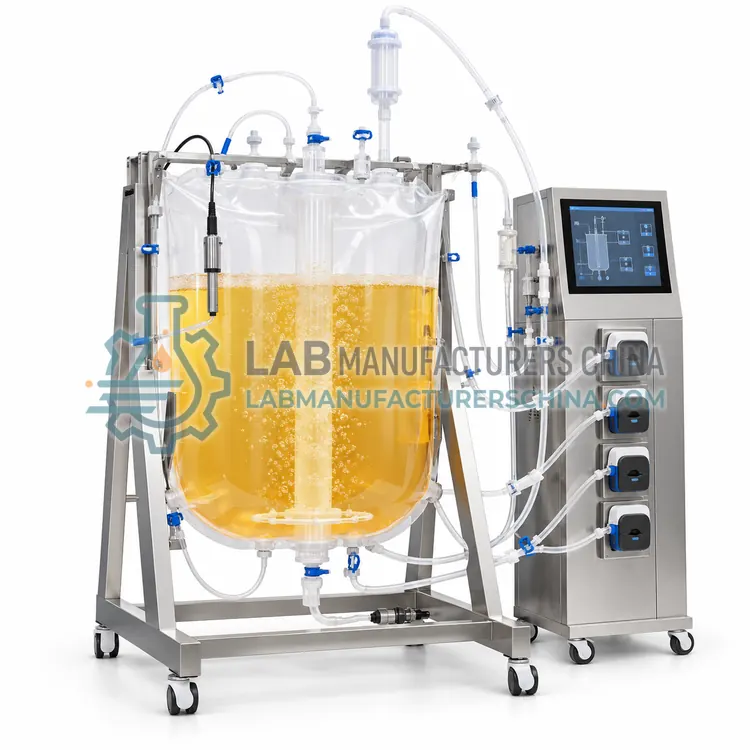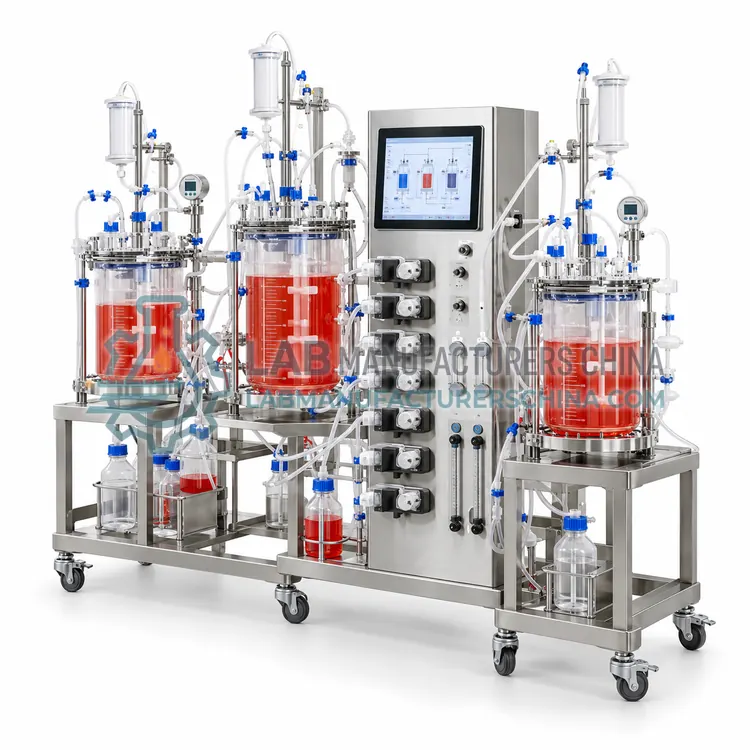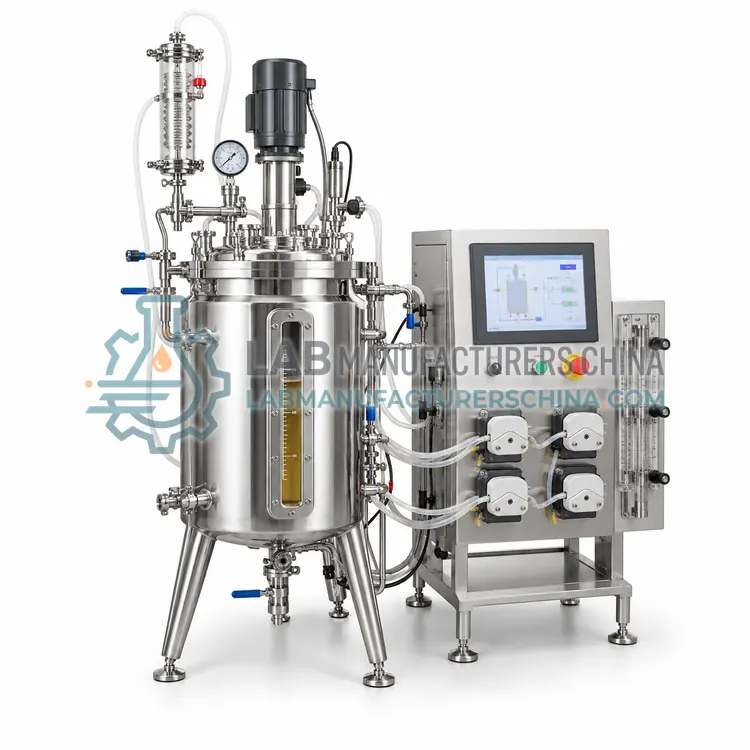
Rocking Single-Use Bioreactor
摇摆式一次性生物反应器
- SKU SUB-0002
- Single-Use Bioreactors
- CE (to be confirmed)
- ISO 13485 manufacturing (to be confirmed)
- ISO 11137 sterilization (to be confirmed)
Price on request — FOB / CIF quoted per order
Prices depend on configuration, quantity and destination port.
Key specifications
| Working volume | 0.1–500 L |
|---|---|
| Mixing principle | Rocking platform, wave induced |
| Rocking angle | 2–12 degrees |
| Rocking speed | 2–40 rocks per minute |
| Temperature range | Ambient +5 to 45 °C |
| Bag material | Multi-layer gas-permeable film |
Request a quote Download brochure · to be provided
By Lab Manufacturers China Technical TeamLast reviewed Standards: EU GMP Annex 1, EU GMP Annex 11, 21 CFR Part 11
What is the Rocking Single-Use Bioreactor?
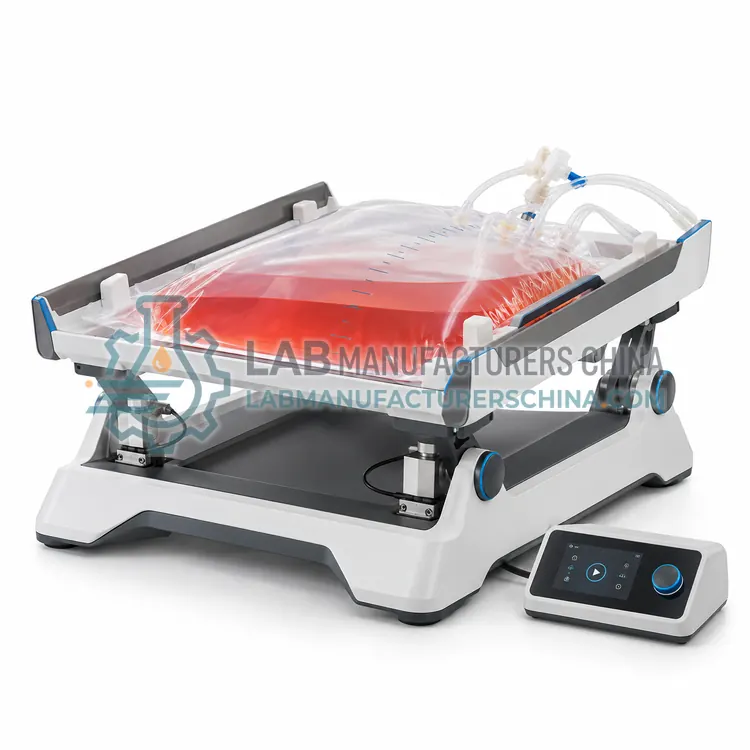
A rocking single-use bioreactor mixes and aerates a bag by tilting it on a platform, creating a wave of liquid across the surface. It provides gentle, low-shear culture at small and mid volumes.
What is the Rocking Single-Use Bioreactor?
A rocking single-use bioreactor mixes and aerates a bag by tilting it on a platform, creating a wave of liquid across the surface. It provides gentle, low-shear culture at small and mid volumes.
Overview
A rocking single-use bioreactor places a pre-sterilized bag on a platform that tilts back and forth, generating a wave of culture that washes across the gas-permeable film each cycle. Because mixing and aeration occur at the liquid surface rather than through a sparger, shear is low and the gas exchange is gentle, which suits fragile cells such as T cells, stem cells and some insect and plant cells. The rocking angle and speed set the mixing intensity and oxygen transfer, and temperature is controlled by a heating plate or air circulation beneath the platform. Bags are available from about 0.1 to 500 litres, and optional ports and sensors support pH, dissolved oxygen and sampling. Rocking systems are simple, require little setup and are widely used in cell therapy and process development.
How does it work?
A single-use bioreactor replaces the product-contact fluid path with a pre-sterilized bag, tubing set, filters and connectors, while the hardware provides mixing, temperature control, sensors and pumps. The bag is irradiated by the supplier, so no cleaning or sterilization is needed before use, and it is discarded after the batch. Mixing is provided by a magnetically coupled impeller, a rocking platform or orbital shaking, depending on the design, and gas exchange occurs through a sparger or a gas-permeable film. Single-use pH and dissolved oxygen sensors are built into the bag or connected as patches and read by reusable transmitters. Because the fluid path is new each time, changeover is fast and cross-contamination between products is limited, but extractables and leachables, bag integrity, pressure and volume limits and supply continuity must all be managed.
What are the key features?
- Bag rocked on a tilting platform for wave mixing
- Low shear suitable for fragile cells
- Gas exchange through the bag film
- Angle and speed control for desired mixing
- Optional pH, dissolved oxygen and sampling ports
What are the technical specifications?
A typical rocking single-use bioreactor configuration offers working volume of 0.1–500 L, mixing principle of Rocking platform, wave induced, rocking angle of 2–12 degrees, rocking speed of 2–40 rocks per minute, temperature range of Ambient +5 to 45 °C and bag material of Multi-layer gas-permeable film. Values are indicative of the product class; the exact figures for each configuration are confirmed on the quotation and the calibration documents supplied with the instrument.
Which applications is it used for?
The Rocking Single-Use Bioreactor is used in cell therapy expansion, stem cell culture, process development and shear-sensitive cell culture. Across the wider Single-Use Bioreactors class, laboratories also deploy it for clinical and multi-product manufacturing, monoclonal antibody production and cell therapy manufacturing.
Which standards and certifications apply?
Relevant standards and methods include EU GMP Annex 1, EU GMP Annex 11, 21 CFR Part 11, ISO 11137, USP <661>, USP <665>, BPOG extractables guidance, ISO 13485 and IEC 61010-1. Certification candidates for this model are CE, ISO 13485 manufacturing and ISO 11137 sterilization; each is to be confirmed for the specific configuration before shipment, and certificates are supplied only where they have been issued.
Inspect bags and tubing on receipt and before fitting, and perform the specified integrity check. Follow the supplier instructions for installation, inflation and leak testing, and avoid sharp edges that could puncture the film. Verify single-use sensor performance against offline measurements, because calibration may drift during long runs. Manage lot changes and supplier updates through change control, since these can affect performance. Handle the bag assembly with clean gloves and aseptic technique at connections, and store bags within the specified temperature and humidity range. Record bag lot numbers with each batch, and dispose of used bags according to local biohazard regulations.
How do I select the right Rocking Single-Use Bioreactor?
Choose a rocking bioreactor for gentle, low-shear culture of sensitive cells at small and mid volumes. In an RFQ specify volume range, rocking angle and speed, bag film and sensor options, temperature control and any sampling or feed requirements.
How does it compare with other Single-Use Bioreactors variants?
Choose the mixing principle from the culture and scale: stirred bags give higher oxygen transfer for demanding cells, rocking and orbital designs are gentler for shear-sensitive cultures and smaller volumes, and airlift and perfusion formats add specific capabilities. Confirm the working volume range and the bag sizes available, and check that the oxygen transfer rate meets the peak demand of your process. Verify which sensors are single-use and how they are calibrated, and check that the bag geometry matches your mixing and sampling needs. Review extractables and leachables data, bag integrity test methods, pressure ratings and storage and shelf life. Decide whether a reusable or disposable sensor path suits your facility, and confirm that the packaging, aseptic connectors and supply agreements fit your clinical or commercial timeline.
Full specifications
| Working volume | 0.1–500 L |
|---|---|
| Mixing principle | Rocking platform, wave induced |
| Rocking angle | 2–12 degrees |
| Rocking speed | 2–40 rocks per minute |
| Temperature range | Ambient +5 to 45 °C |
| Bag material | Multi-layer gas-permeable film |
| Sterilization | Gamma irradiation 25–40 kGy |
| Sensors | Single-use pH and dissolved oxygen options |
Indicative values for this product class. Final specifications are confirmed on the quotation and in the calibration documents supplied with the instrument.
Applications
- Cell therapy expansion
- Stem cell culture
- Process development
- Shear-sensitive cell culture
Key features
- Bag rocked on a tilting platform for wave mixing
- Low shear suitable for fragile cells
- Gas exchange through the bag film
- Angle and speed control for desired mixing
- Optional pH, dissolved oxygen and sampling ports
Frequently asked questions about Rocking Single-Use Bioreactor
Mixing comes from a slow wave moving across the liquid surface rather than from an impeller or vigorous sparging, so cells experience little mechanical stress. This helps preserve viability in fragile populations such as T cells and stem cells.
Oxygen transfer is lower than in stirred or sparged systems, and volume is typically limited to a few hundred litres because the wave must move the whole liquid mass. Very high cell densities may need oxygen enrichment or a different mixing design.
They suit clinical batches, cell therapy and process development rather than large production volumes. For high-density cell culture at large scale, stirred single-use or stainless bioreactors generally provide better oxygen transfer and control.
It cultivates cells or microorganisms in a pre-sterilized disposable bag and is used for clinical batches, multi-product manufacturing and process development. Its main benefits are fast changeover, reduced cleaning validation and lower cross-contamination risk between products.
Yes. The hardware still needs qualification, the process must be validated and extractables and leachables data must be reviewed for the bag. Bag integrity tests and supplier quality controls are documented, and changes to materials or processes are managed under change control.
Bags commonly range from about one litre to 2,000 litres, with pressure limits well below stainless vessels. Large volumes and high pressures still favor stainless steel, while single-use dominates at small and mid scales where flexibility and speed matter most.
Related models