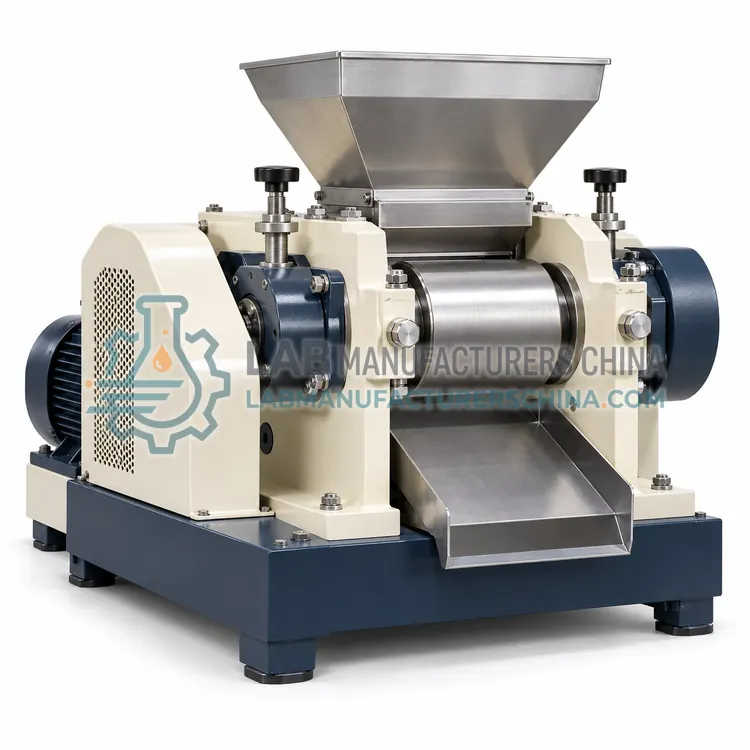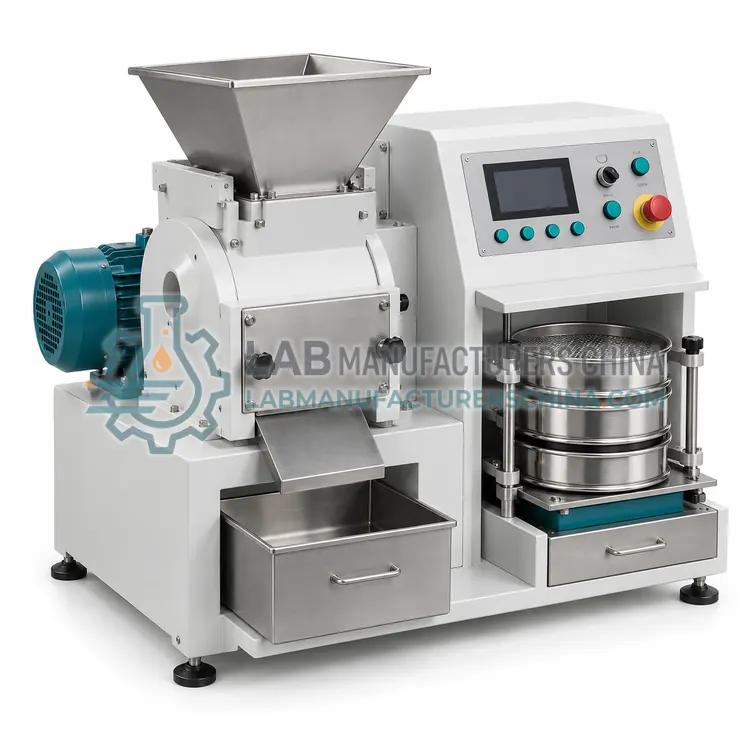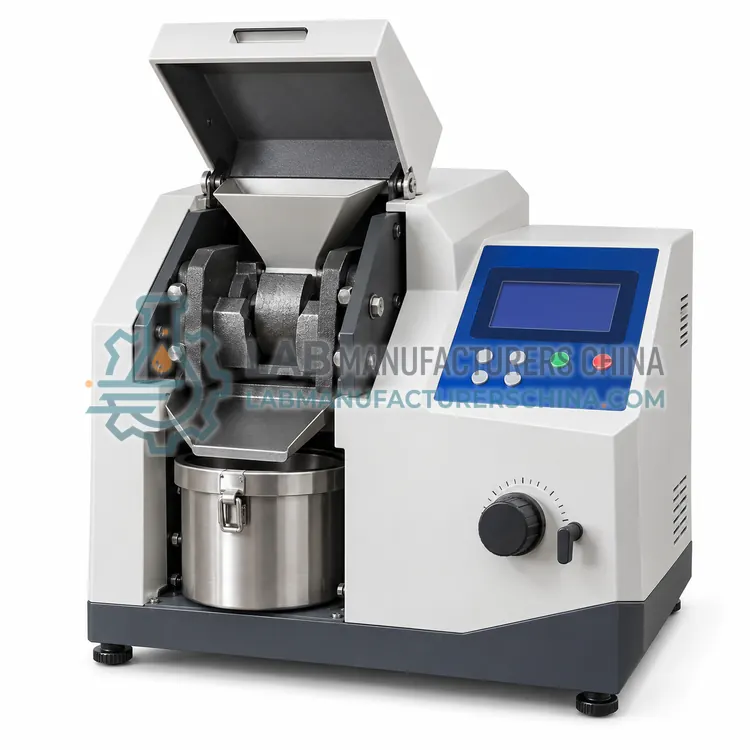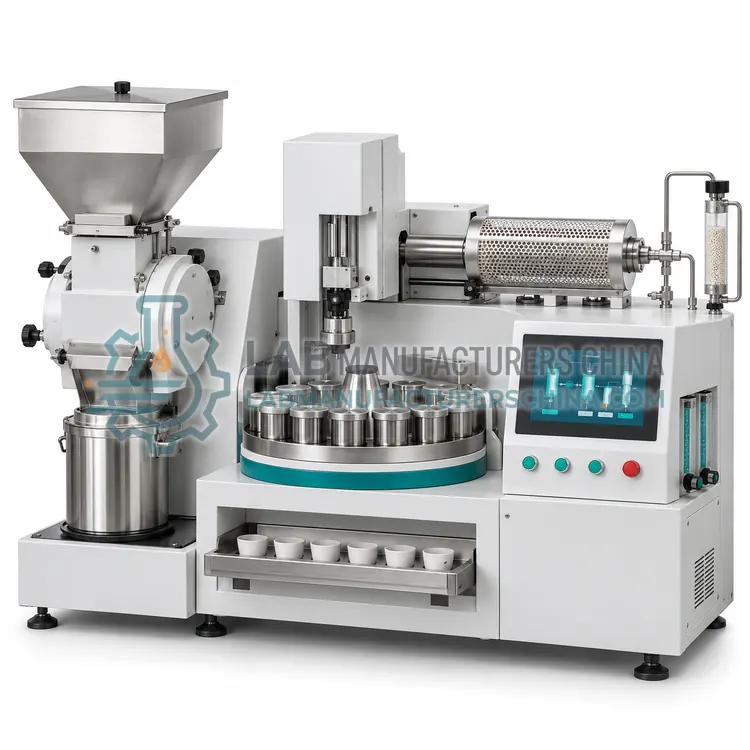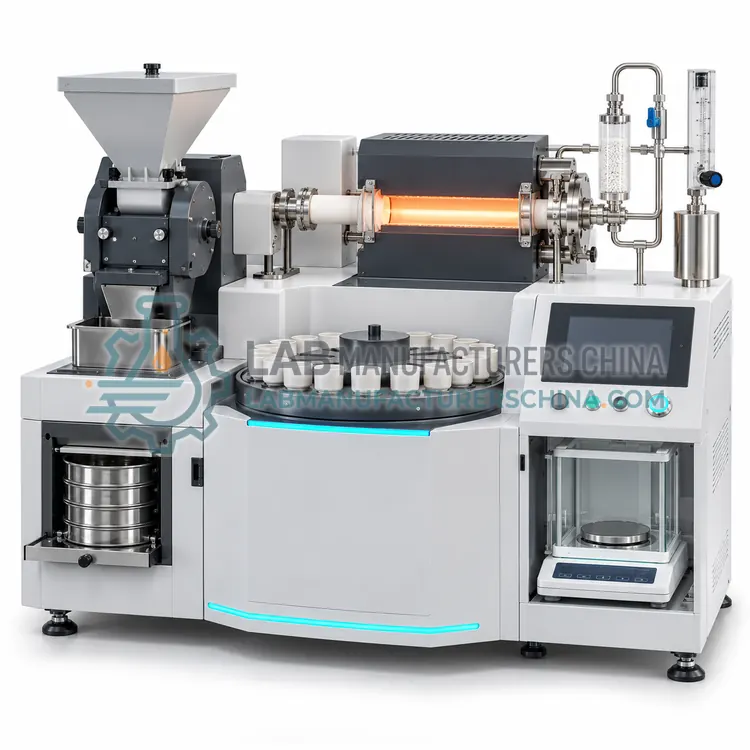
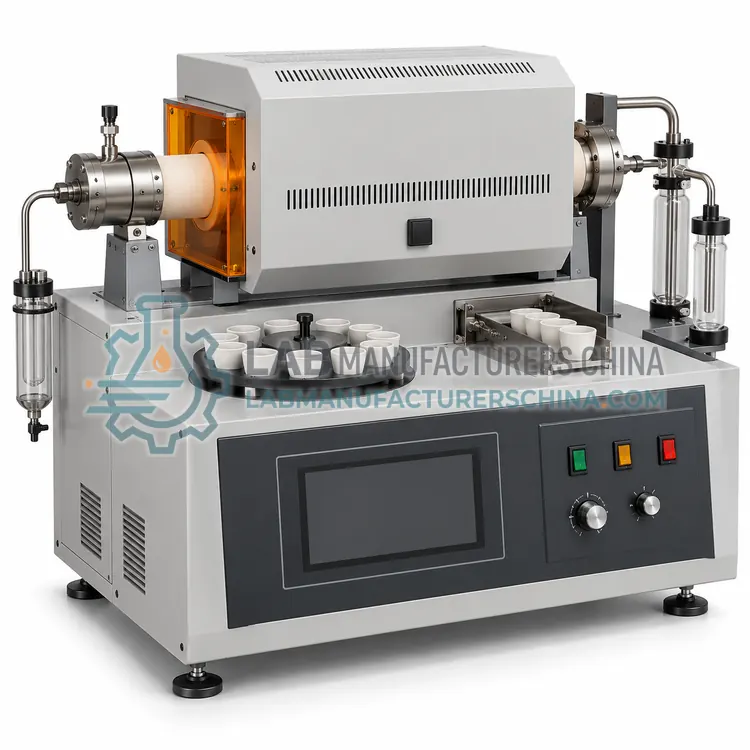
Laboratory Cone Crusher
实验室圆锥破碎机
- SKU SCR-0003
- Sample Crushers
- CE (to be confirmed)
- ISO 9001 manufacturing (to be confirmed)
Price on request — FOB / CIF quoted per order
Prices depend on configuration, quantity and destination port.
Key specifications
| Maximum feed size | 30–60 mm |
|---|---|
| Product size | 3–15 mm depending on setting |
| Throughput | 200–1000 kg/h |
| Mantle diameter | 200–600 mm |
| Liner material | Manganese steel |
| Eccentric speed | 250–400 rpm |
Request a quote Download brochure · to be provided
By Lab Manufacturers China Technical TeamLast reviewed Standards: ISO 3082, ISO 12743, ASTM E877
What is the Laboratory Cone Crusher?
A laboratory cone crusher crushes ore continuously between a gyrating mantle and a fixed concave, giving high throughput and a closely controlled product. It is used where a jaw or roll crusher cannot keep up with sample volumes.
What is the Laboratory Cone Crusher?
A laboratory cone crusher crushes ore continuously between a gyrating mantle and a fixed concave, giving high throughput and a closely controlled product. It is used where a jaw or roll crusher cannot keep up with sample volumes.
Overview
The crushing chamber is formed by a fixed concave bowl liner and an eccentrically rotating mantle. Material is squeezed as the mantle closes on one side and released on the opposite side, so crushing is continuous rather than cyclic, which gives high capacity for the installed power. The open-side and closed-side settings define the product size and are adjusted by raising or lowering the mantle or changing liners. Laboratory models process from about 200 to 1000 kg per hour from feed of 30 to 60 mm, and some units run dry or wet. Because the chamber is choke-fed, the crusher must be supplied with a continuous, controlled feed; starvation produces a coarser, less uniform product. Manganese liners are standard and can be replaced when the profile wears beyond the specified setting range.
How does it work?
Size reduction in mineral laboratories relies on compression, impact and shear, and each machine type applies them differently. Jaw crushers compress rock between a fixed and a moving jaw, and the closed-side setting controls product size. Roll crushers pass material between two rotating rolls and give a narrower product with less fines. Cone crushers use a gyrating mantle inside a concave to crush continuously at higher throughput. Hammer crushers strike material with swinging hammers against a breaker plate and discharge it through a screen. Reduction ratio per stage is limited, typically three to six to one, so laboratories arrange two or three crushers in series: a primary jaw, a secondary roll or cone and a final pulverizing stage. Feed must be steady, dry and below the rated size, because overfeeding stalls the drive and raises wear. Grinding surfaces are made of manganese, chrome or tungsten carbide, and the choice affects contamination.
What are the key features?
- Gyrating mantle with fixed concave bowl liner
- Continuous crushing for high throughput per kilowatt
- Adjustable open-side and closed-side settings
- Feed size from about 30 to 60 mm
- Manganese liners that can be replaced in place
- Sealed housing with dust extraction for dry operation
What are the technical specifications?
A typical laboratory cone crusher configuration offers maximum feed size of 30–60 mm, product size of 3–15 mm depending on setting, throughput of 200–1000 kg/h, mantle diameter of 200–600 mm, liner material of Manganese steel and eccentric speed of 250–400 rpm. Values are indicative of the product class; the exact figures for each configuration are confirmed on the quotation and the calibration documents supplied with the instrument.
Which applications is it used for?
The Laboratory Cone Crusher is used in continuous ore crushing at pilot scale, secondary crushing for large sample programmes, preparation of plant and bulk samples and cement and aggregate feed preparation. Across the wider Sample Crushers class, laboratories also deploy it for primary crushing of mine and drill core samples, secondary crushing before pulverizing and concentrate and tailings sample preparation.
Which standards and certifications apply?
Relevant standards and methods include ISO 3082, ISO 12743, ASTM E877, GB/T 2007 and IEC 61010-1. Certification candidates for this model are CE and ISO 9001 manufacturing; each is to be confirmed for the specific configuration before shipment, and certificates are supplied only where they have been issued.
Install crushers on a rigid floor with enough clearance for the moving jaw or cone, and anchor them so vibration does not loosen the drive. Provide dust extraction designed for mineral dust and, where silica is present, follow local occupational exposure limits and provide respiratory protection. Feed in small increments at the rated rate rather than in batches that choke the chamber, and never feed wet, sticky material that blinds screens. Record the closed-side setting and product size after each adjustment, and replace worn plates, rolls or hammers before the product size drifts outside specification. Reduce dust formation by keeping material slightly damp only if the method allows, since added water changes the sample moisture. Clean thoroughly between samples, and run a small quantity of the next sample through as a purge when trace-grade work is done.
How do I select the right Laboratory Cone Crusher?
Select the cone crusher when sample volumes exceed what a roll crusher handles and a continuous flow is acceptable. Specify feed size, setting range, throughput and liner material, and plan a controlled feed system, because choke feeding is required and starvation degrades product quality.
How does it compare with other Sample Crushers variants?
Work backwards from the analytical fineness you need. Match the primary crusher feed opening to the largest lump arriving from the field, then choose one or two further crushing stages so that the pulverizer receives material below its rated feed size, usually 1 to 3 mm. Check the reduction ratio at each step and keep it moderate, since forcing a large reduction increases wear and produces a wider size spread. Consider hardness and abrasiveness: quartz-rich and iron ore samples wear manganese steel quickly, so hardened or carbide-lined surfaces may be justified. Decide how contamination-sensitive the assay is, because chromium and iron from the crushing surfaces bias Ni, Cr and Fe values. Look for sealed, dust-extracted housings since respirable crystalline silica is a health hazard, and for adjustable settings with an accessible calibration, so the product size can be verified on a sieve.
Full specifications
| Maximum feed size | 30–60 mm |
|---|---|
| Product size | 3–15 mm depending on setting |
| Throughput | 200–1000 kg/h |
| Mantle diameter | 200–600 mm |
| Liner material | Manganese steel |
| Eccentric speed | 250–400 rpm |
| Motor power | 4–15 kW |
| Power supply | 380 V, 50/60 Hz, three phase |
Indicative values for this product class. Final specifications are confirmed on the quotation and in the calibration documents supplied with the instrument.
Applications
- Continuous ore crushing at pilot scale
- Secondary crushing for large sample programmes
- Preparation of plant and bulk samples
- Cement and aggregate feed preparation
Key features
- Gyrating mantle with fixed concave bowl liner
- Continuous crushing for high throughput per kilowatt
- Adjustable open-side and closed-side settings
- Feed size from about 30 to 60 mm
- Manganese liners that can be replaced in place
- Sealed housing with dust extraction for dry operation
Frequently asked questions about Laboratory Cone Crusher
In a cone crusher the material bed transfers force between particles, which crushes efficiently and protects the liners. If the chamber is starved, the mantle strikes individual lumps directly, producing coarser product and faster wear.
By raising or lowering the mantle to change the closed-side setting, or by fitting liners of a different profile. The setting is verified by sieving a check sample, and both open-side and closed-side values are recorded.
Some laboratory models are designed for wet operation, but most dry chambers handle moisture poorly because fines pack between the mantle and liner. Generally the feed should be air-dried to a free-flowing condition.
Usually two or three, depending on the feed size and the target fineness. A common arrangement is a primary jaw crusher, a secondary roll or cone crusher and a pulverizer, keeping each reduction ratio moderate to limit wear and fines.
Set the crusher so that the product meets the top size required for the next stage, and verify it by sieving. Keep the setting as wide as the following equipment allows, because tight settings reduce throughput and increase wear.
Tungsten carbide and ceramic-lined surfaces add little iron or chromium and suit trace element work. Manganese and chrome steel are durable and economical but can raise iron, chromium or nickel in sensitive assays, so blanks should be monitored.
Related models