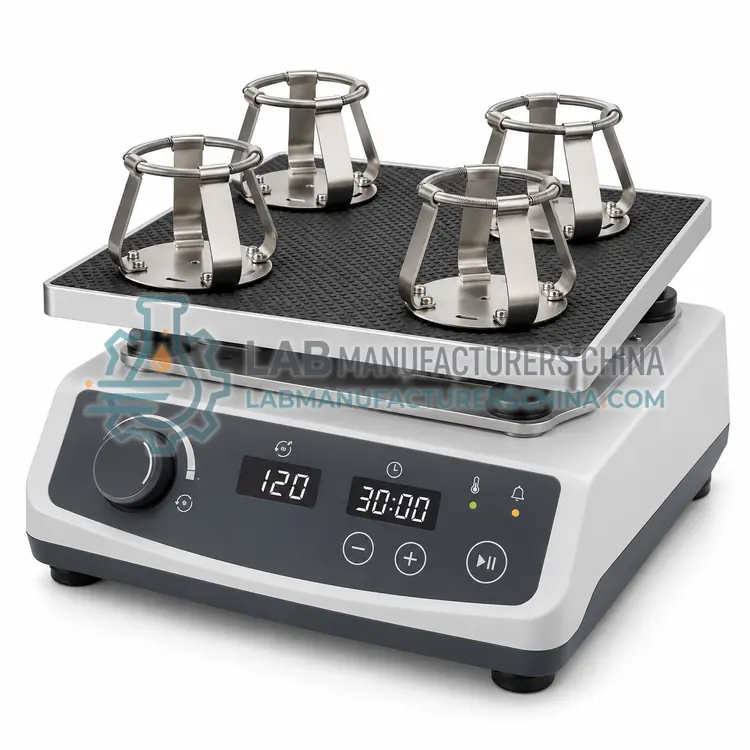
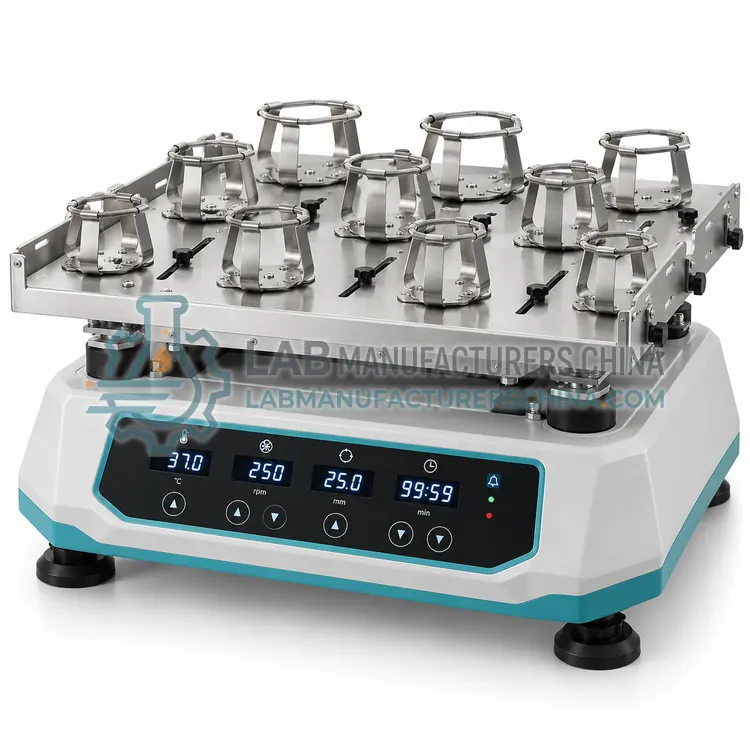
Heavy-Duty Orbital Shaker
重载圆周摇床
- SKU ORS-0002
- Orbital Shakers
- CE (to be confirmed)
- ISO 9001 manufacturing (to be confirmed)
- RoHS (to be confirmed)
Price on request — FOB / CIF quoted per order
Prices depend on configuration, quantity and destination port.
Key specifications
| Platform size | 500×500 to 900×900 mm |
|---|---|
| Speed range | 20–300 rpm |
| Orbit diameter | 19–50 mm |
| Load rating | 15–50 kg |
| Drive type | Magnetic or heavy belt |
| Duty cycle | Continuous |
Request a quote Download brochure · to be provided
By Lab Manufacturers China Technical TeamLast reviewed Standards: IEC 61010-1, IEC 61010-2-051, ISO 9001
What is the Heavy-Duty Orbital Shaker?
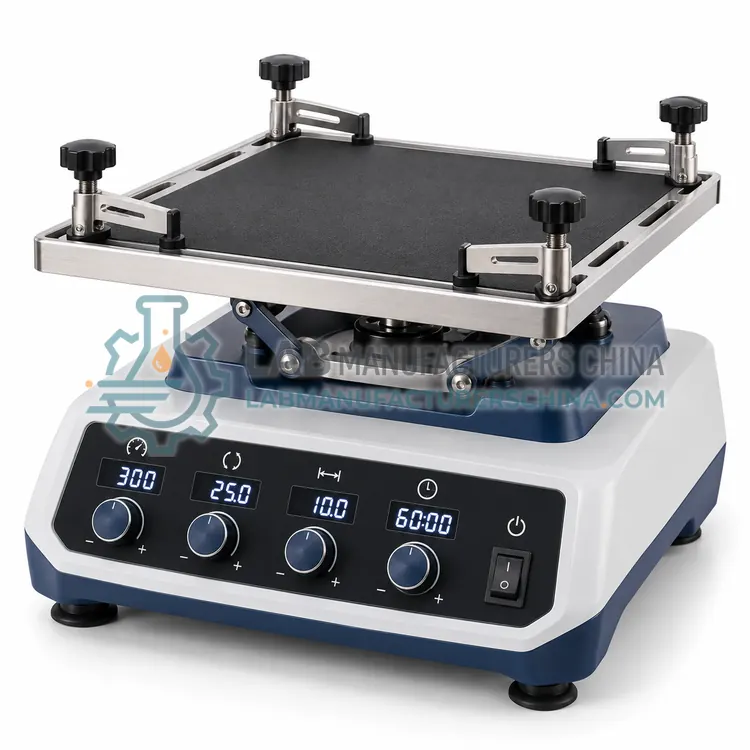
A heavy-duty orbital shaker carries large loads continuously with a reinforced drive and strong bearings. It is chosen for dense flask sets, large vessels and multi-day mixing in the most demanding laboratory workflows.
What is the Heavy-Duty Orbital Shaker?
A heavy-duty orbital shaker carries large loads continuously with a reinforced drive and strong bearings. It is chosen for dense flask sets, large vessels and multi-day mixing in the most demanding laboratory workflows.
Overview
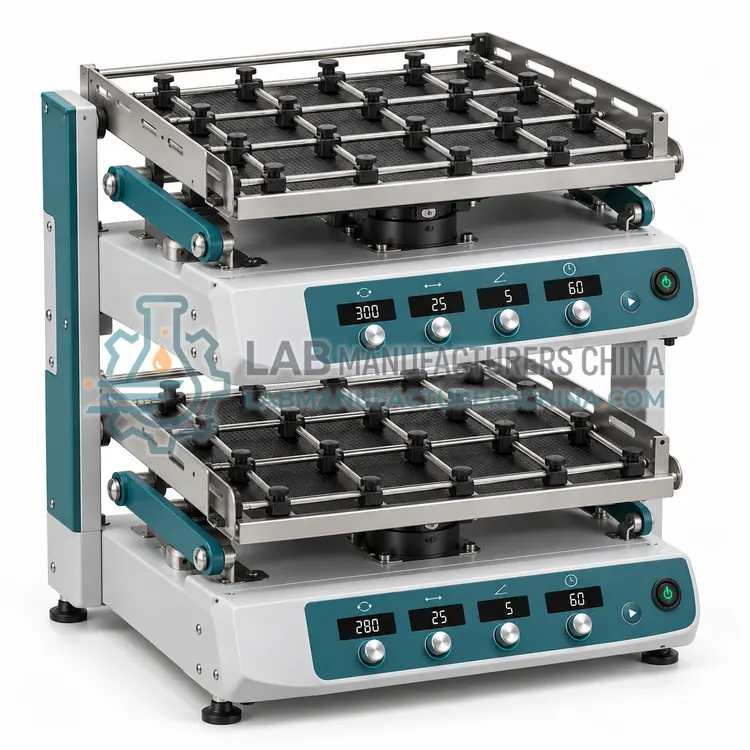
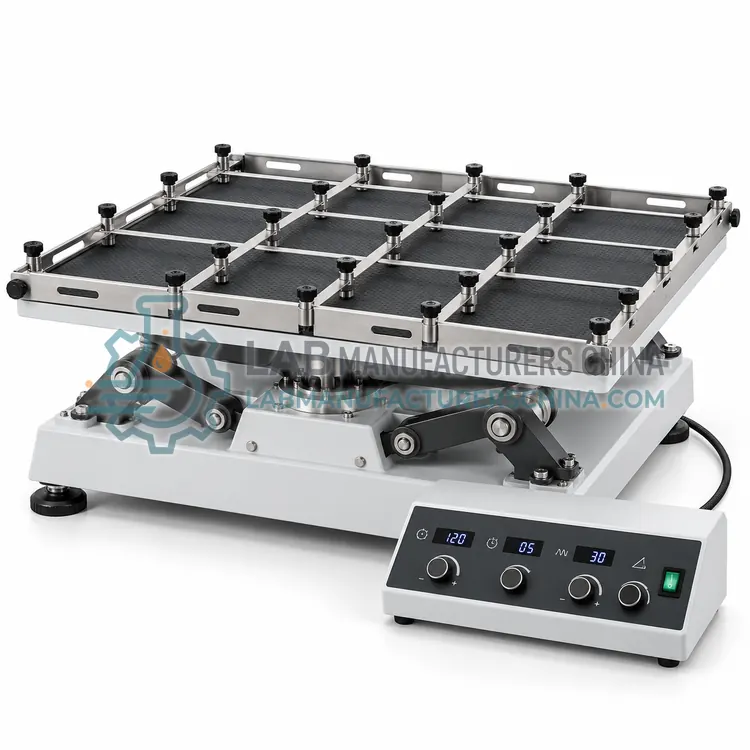
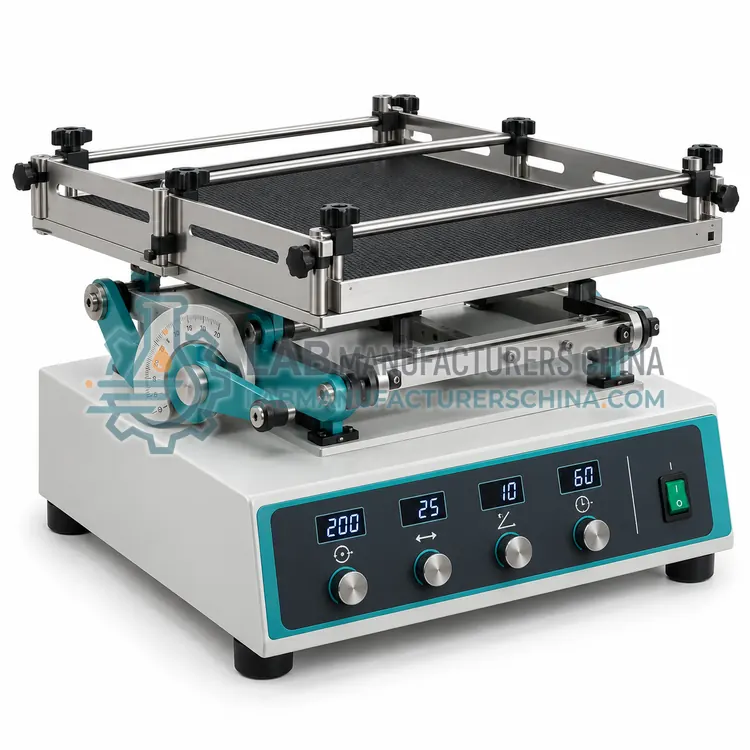
The heavy-duty orbital shaker is built for weight and long runs, with a reinforced platform of 500 to 900 mm, load ratings of 15 to 50 kg and sealed bearings rated for continuous duty. Speeds run 20 to 300 rpm with orbits of 19 to 50 mm, and drives may be magnetic or belt with a large motor. Closed-loop control holds rpm against load changes, and a soft start protects the drive and prevents splashing. Platforms accept flask clamps, bottle holders and trays, and the base is often cast or heavy-gauge steel to resist walking. Some models include a second tier for higher capacity. It suits production-scale mixing, large culture batches and industrial sample preparation where reliability over long periods matters.
How does it work?
An orbital shaker turns an eccentric bearing with a motor, converting rotation into a circular motion of the platform. The offset between the motor axis and the platform center sets the orbit diameter, usually 10 to 50 mm, and the speed is set by the controller. A brushless motor drives through a belt or directly, and sealed bearings support the load so the unit can run for long periods. Closed-loop speed control measures rpm with a tachometer or Hall sensor and corrects against load changes. Platforms bolt to the drive and accept flask clamps, tube racks, trays or bottle holders. A timer or programmable controller runs the cycle, and some models add a soft start, which brings the platform up to speed gradually to avoid spilling liquid from flasks.
What are the key features?
- Reinforced platform of 500 to 900 mm
- Load rating of 15 to 50 kg
- Sealed bearings rated for continuous duty
- Magnetic or heavy belt drive with soft start
- Speed 20 to 300 rpm with 19 to 50 mm orbit
- Optional second tier for higher capacity
What are the technical specifications?
A typical heavy-duty orbital shaker configuration offers platform size of 500×500 to 900×900 mm, speed range of 20–300 rpm, orbit diameter of 19–50 mm, load rating of 15–50 kg, drive type of Magnetic or heavy belt and duty cycle of Continuous. Values are indicative of the product class; the exact figures for each configuration are confirmed on the quotation and the calibration documents supplied with the instrument.
Which applications is it used for?
The Heavy-Duty Orbital Shaker is used in large batch culture and mixing, production-scale extraction, industrial sample preparation and multi-day continuous agitation. Across the wider Orbital Shakers class, laboratories also deploy it for bacterial and yeast culture, liquid-liquid extraction and staining and destaining of gels.
Which standards and certifications apply?
Relevant standards and methods include IEC 61010-1, IEC 61010-2-051 and ISO 9001. Certification candidates for this model are CE, ISO 9001 manufacturing and RoHS; each is to be confirmed for the specific configuration before shipment, and certificates are supplied only where they have been issued.
Balance the platform by loading symmetrically, since an uneven load causes vibration, noise and rapid bearing wear, and can move the unit across the bench. Stay within the load rating at the chosen speed and start with a soft or low-speed ramp when flasks are filled. Site the shaker on a level, stable surface with clearance for ventilation and moving parts, and never operate it with the platform unsecured. Clean spills promptly, because media and reagents corrode clamps and platforms. Inspect belts, bearings and clamps on schedule, and check feet and fasteners for loosening that would worsen vibration.
How do I select the right Heavy-Duty Orbital Shaker?
Select the heavy-duty shaker when loads exceed about 10 kg, platforms must be large, or mixing runs for days. Benchtop units are cheaper for light, intermittent work. In the RFQ, specify load mass, platform size, speed and orbit, duty cycle and clamp types.
How does it compare with other Orbital Shakers variants?
Choose an orbital shaker for smooth, gentle mixing that suits culture and extraction, and pick the orbit diameter for the application: 10 to 19 mm for gentle work, 19 to 25 mm for most culture and mixing, and 25 to 50 mm for large volumes needing strong agitation. Match the load rating to the heaviest flask set at the working speed, since ratings fall as speed rises. Decide the platform size and clamp types, then the drive and control features, such as closed-loop speed, soft start, timer and duty cycle. For continuous operation, specify a unit rated for it. Confirm power, footprint and whether stacking or a larger platform is needed.
Full specifications
| Platform size | 500×500 to 900×900 mm |
|---|---|
| Speed range | 20–300 rpm |
| Orbit diameter | 19–50 mm |
| Load rating | 15–50 kg |
| Drive type | Magnetic or heavy belt |
| Duty cycle | Continuous |
| Soft start | Standard |
| Speed accuracy | ±1 rpm |
| Power | 100–400 W |
| Power supply | 220 V, 50/60 Hz |
Indicative values for this product class. Final specifications are confirmed on the quotation and in the calibration documents supplied with the instrument.
Applications
- Large batch culture and mixing
- Production-scale extraction
- Industrial sample preparation
- Multi-day continuous agitation
Key features
- Reinforced platform of 500 to 900 mm
- Load rating of 15 to 50 kg
- Sealed bearings rated for continuous duty
- Magnetic or heavy belt drive with soft start
- Speed 20 to 300 rpm with 19 to 50 mm orbit
- Optional second tier for higher capacity
Frequently asked questions about Heavy-Duty Orbital Shaker
Typically 15 to 50 kg when balanced and evenly distributed, with the rating falling at higher speeds. The platform, drive and bearings are sized together, so the stated rating applies only when the load is arranged as recommended.
A magnetic coupling turns the platform without a shaft through the base, so there is no seal to wear out and no grease path to leak. It also reduces vibration and noise and is easier to keep clean in dusty or humid environments.
Yes, when specified for continuous duty. Sealed bearings, a robust drive and heat management allow multi-day runs, but the load must stay within rating, the platform must be balanced, and clamps must be checked before each cycle.
It mixes, aerates and keeps samples suspended by moving a platform in a circle. Typical uses are microbial and cell culture, liquid extraction, gel staining, sample homogenization and dissolution studies in flasks, tubes and bottles.
Use 10 to 19 mm for gentle mixing and sensitive samples, 19 to 25 mm for most culture, extraction and staining, and 25 to 50 mm for large volumes that need strong agitation. Larger orbits give more movement but can splash or foam light liquids.
Vibration from an unbalanced load, worn bearings or a surface that is not level makes the unit move. Distribute the load symmetrically, tighten clamps, check the feet and fasteners, and keep the speed within the rating to reduce movement.
Related models