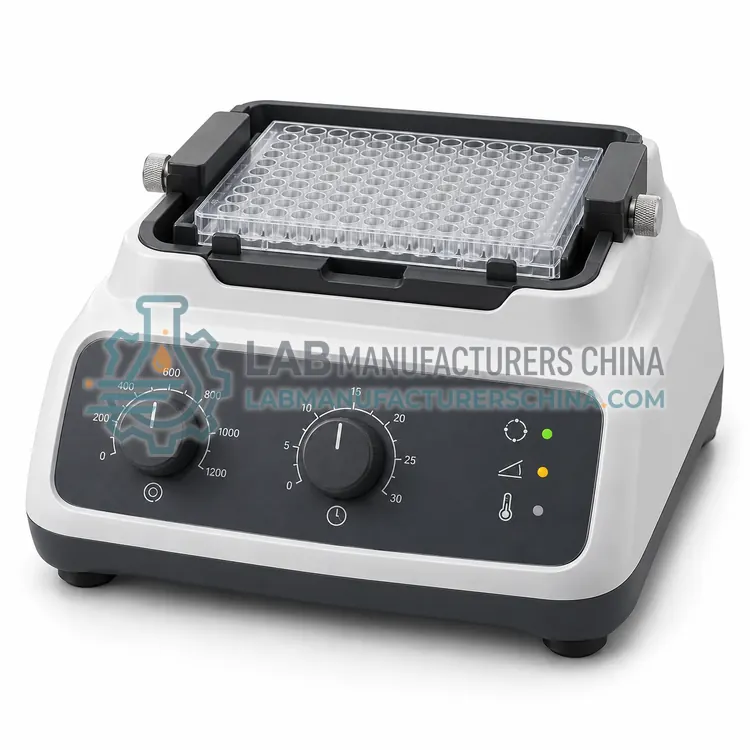
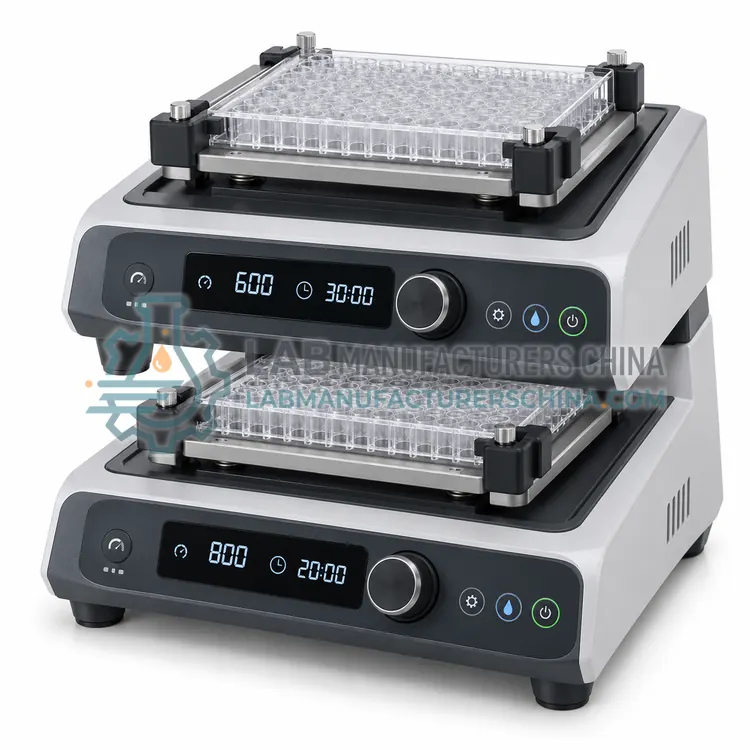
Stackable Microplate Shaker
叠放式微孔板摇床
- SKU MIS-0005
- Microplate Shakers
- CE (to be confirmed)
- ISO 9001 manufacturing (to be confirmed)
- RoHS (to be confirmed)
Price on request — FOB / CIF quoted per order
Prices depend on configuration, quantity and destination port.
Key specifications
| Plate capacity | 1–2 plates per unit |
|---|---|
| Stacking capacity | 2 units |
| Speed range | 100–1500 rpm |
| Orbit diameter | 2 mm |
| Speed accuracy | ±5 rpm |
| Timer range | 1 s to 99 min |
Request a quote Download brochure · to be provided
By Lab Manufacturers China Technical TeamLast reviewed Standards: IEC 61010-1, IEC 61010-2-051, ISO 9001
What is the Stackable Microplate Shaker?
A stackable microplate shaker is designed to support another identical unit on top, saving bench space. It is chosen when several plates must be mixed at different settings in one compact area.
What is the Stackable Microplate Shaker?
A stackable microplate shaker is designed to support another identical unit on top, saving bench space. It is chosen when several plates must be mixed at different settings in one compact area.
Overview
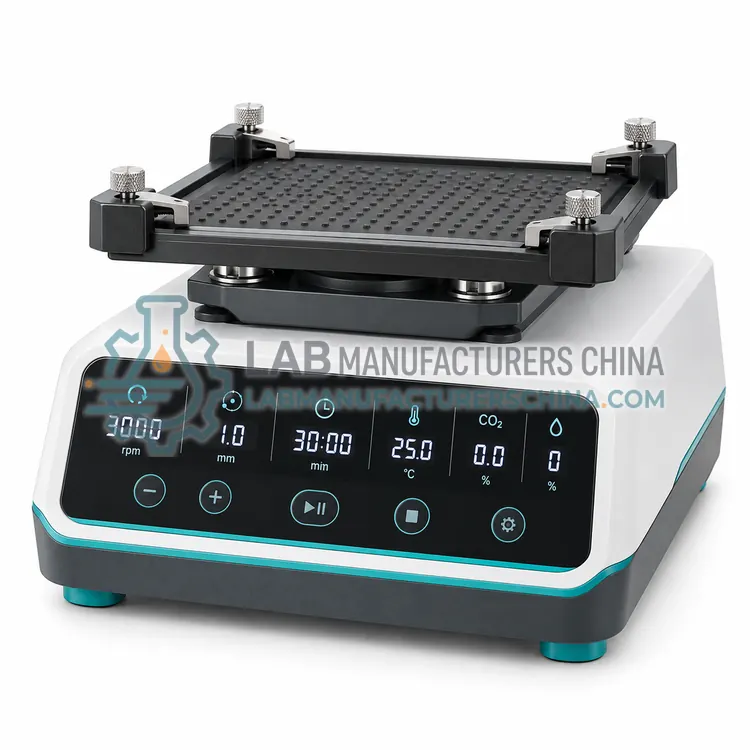
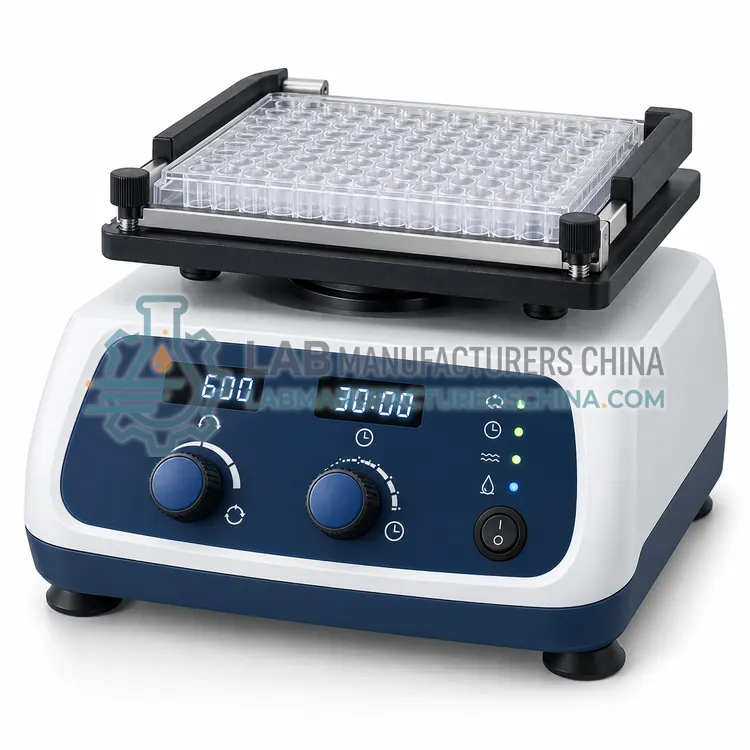
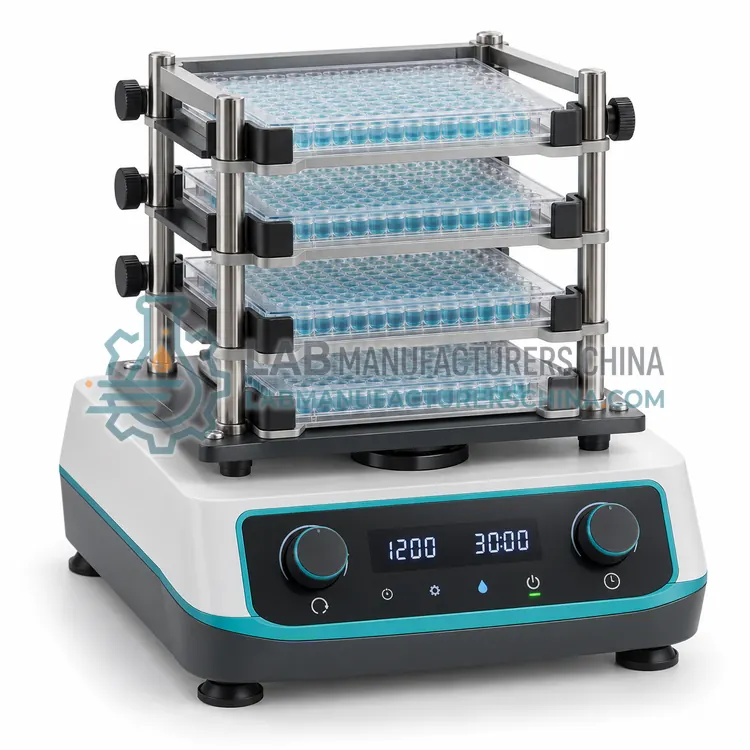
The stackable microplate shaker has a reinforced top and matched footprint so a second unit can be placed on it, doubling mixing positions within one bench area. Each unit keeps its own controller, so two protocols run independently at different speeds and times. Platforms hold one or two plates with clips or mats, and speeds run 100 to 1500 rpm with a 2 mm orbit. Closed-loop control and timers are standard, and some models add pulse mode. The bottom unit must be stable and level, since stacking raises the center of gravity and adds load to the lower platform. It suits busy assay benches and readers used with several plates at once where bench space is tight.
How does it work?
A microplate shaker moves a small platform at high frequency with a short orbit, typically 1.5 to 3 mm, so each well is agitated without splashing liquid out of the small volume. A brushless motor turns an eccentric bearing, and the platform is held by plate clips or a rubber mat so plates and deep-well blocks stay in place. Speed is set from about 100 to 1500 rpm and held by closed-loop control, and timers or short-run buttons provide the pulses used in assay protocols. The small orbit and high frequency create vigorous mixing at low amplitude, which is effective for resuspending pellets and mixing reagents in wells. Some models accept two or four plates at once, and platforms may be interchangeable for tubes or microtubes.
What are the key features?
- Reinforced top and matched footprint
- Second identical unit stacks on top
- Independent controller per unit
- Platforms for one or two plates each
- Speed 100 to 1500 rpm with 2 mm orbit
- Closed-loop control and timer standard
What are the technical specifications?
A typical stackable microplate shaker configuration offers plate capacity of 1–2 plates per unit, stacking capacity of 2 units, speed range of 100–1500 rpm, orbit diameter of 2 mm, speed accuracy of ±5 rpm and timer range of 1 s to 99 min. Values are indicative of the product class; the exact figures for each configuration are confirmed on the quotation and the calibration documents supplied with the instrument.
Which applications is it used for?
The Stackable Microplate Shaker is used in busy assay benches, parallel protocol runs, reader-adjacent mixing stations and space-limited laboratories. Across the wider Microplate Shakers class, laboratories also deploy it for ELISA plate mixing and washing, cell-based assay mixing and immunoassay incubation.
Which standards and certifications apply?
Relevant standards and methods include IEC 61010-1, IEC 61010-2-051 and ISO 9001. Certification candidates for this model are CE, ISO 9001 manufacturing and RoHS; each is to be confirmed for the specific configuration before shipment, and certificates are supplied only where they have been issued.
Place the shaker on a level surface close to the reader or washer so plates are not carried far, and ensure plates are fully seated in the clips before starting. Do not exceed the speed rating for the plates in use, since very high speeds can splash contents or loosen seals on covered plates. Balance the platform when more than one plate is loaded. Clean spills and spills of reagents promptly, since salts and proteins corrode the platform and clips. Check clips, mats and bearings on schedule, and keep covers or seals in good condition to prevent cross-contamination between wells.
How do I select the right Stackable Microplate Shaker?
Select a stackable shaker when two independent mixing positions are needed in a small bench area, or when protocols run in parallel. Single units suffice otherwise. In the RFQ, specify units, plate capacity, speed range, orbit and whether pulse mode is needed.
How does it compare with other Microplate Shakers variants?
Choose a microplate shaker when plates, deep-well blocks or strip wells must be mixed quickly in small volumes, as in ELISA, immunoassays and cell assays. Set the speed range from the task, using moderate speeds for gentle mixing and higher speeds for resuspension. Match the platform to the plate type and count, checking that clips or mats hold plates securely at high speed. Decide between single-plate and multi-plate platforms, and whether a timer, pulse mode or program storage is needed. Confirm the orbit suits the well volume, since too large an orbit splashes small volumes, and check noise, footprint and power supply before ordering.
Full specifications
| Plate capacity | 1–2 plates per unit |
|---|---|
| Stacking capacity | 2 units |
| Speed range | 100–1500 rpm |
| Orbit diameter | 2 mm |
| Speed accuracy | ±5 rpm |
| Timer range | 1 s to 99 min |
| Holding | Clips or rubber mats |
| Noise level | ≤55 dB(A) |
| Power | 20–60 W each |
| Power supply | 220 V, 50/60 Hz each |
Indicative values for this product class. Final specifications are confirmed on the quotation and in the calibration documents supplied with the instrument.
Applications
- Busy assay benches
- Parallel protocol runs
- Reader-adjacent mixing stations
- Space-limited laboratories
Key features
- Reinforced top and matched footprint
- Second identical unit stacks on top
- Independent controller per unit
- Platforms for one or two plates each
- Speed 100 to 1500 rpm with 2 mm orbit
- Closed-loop control and timer standard
Frequently asked questions about Stackable Microplate Shaker
Usually two, because the top unit must be supported and the assembly kept stable. The lower unit carries the extra weight on its platform, so the stack should be level and the load kept within rating on both units.
No. Each unit keeps its own speed and timer controls, so two protocols run independently at different settings. This makes the stack useful when one plate needs gentle mixing and another needs vigorous resuspension at the same time.
Little, if the stack is stable and level, since each unit has its own drive and platform. The added weight on the lower unit slightly increases its load, so speeds may need checking, and vibration from the top unit can couple through if loading is uneven.
It agitates microplates, strip wells and deep-well blocks during ELISA, immunoassays and cell-based assays, mixing reagents, washing and resuspending contents in small volumes. High frequency with a small orbit mixes effectively without splashing liquid out of the wells.
Microplate shakers use small orbits of about 1.5 to 3 mm. A short orbit at high frequency mixes without throwing liquid against the well walls or over the edges, which matters because well volumes are small and even modest splashing causes cross-contamination.
Typical ELISA steps use 300 to 700 rpm for short periods, and resuspension of pellets may need 800 to 1200 rpm. The assay protocol usually specifies speed and time, and covers or seals should stay in place during vigorous mixing.
Related models