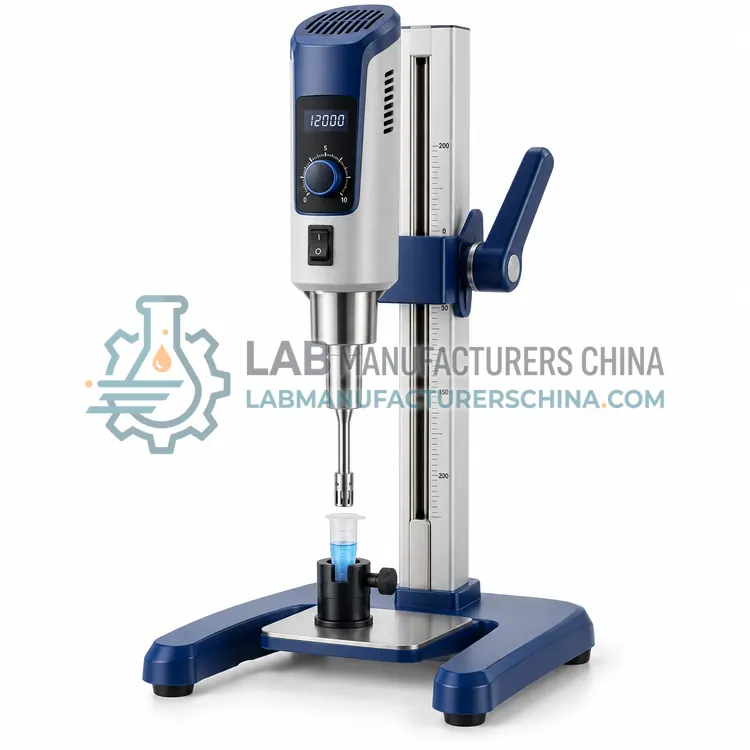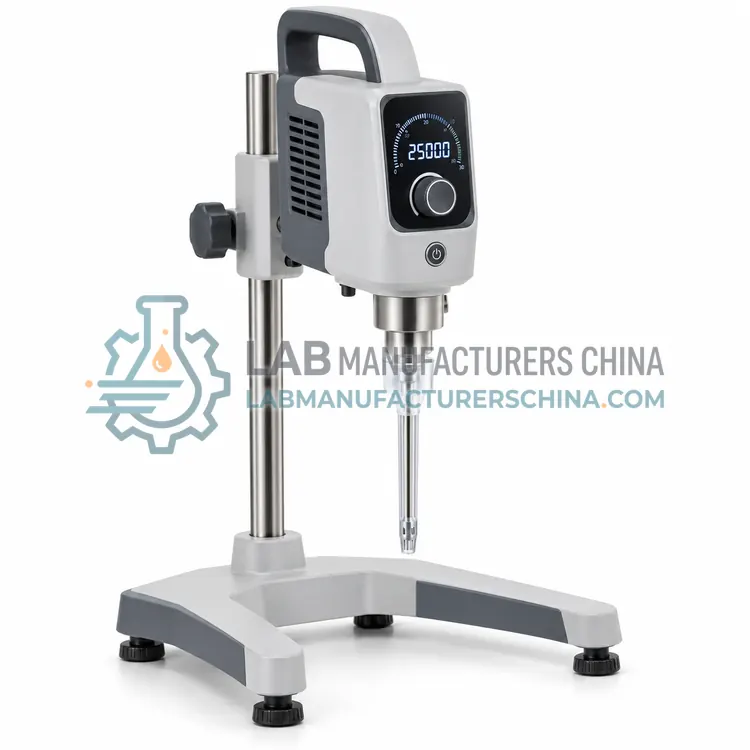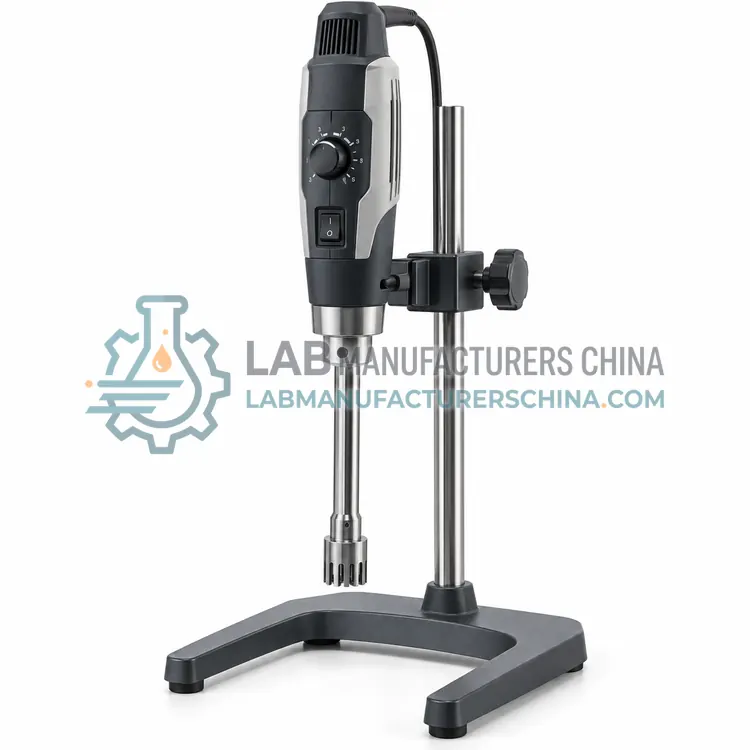
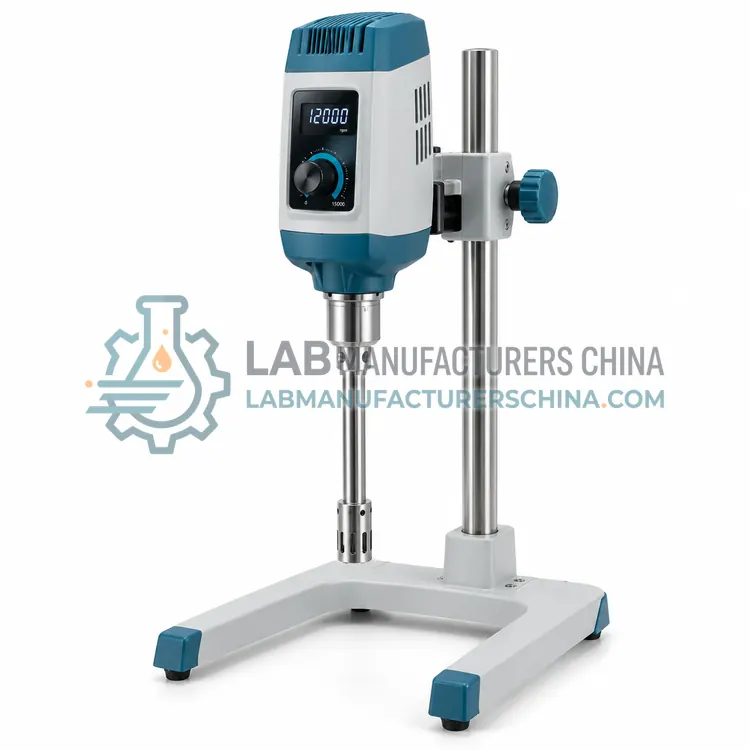
Benchtop Digital High-Speed Homogenizer
台式数显高速均质机
- SKU HSH-0002
- High-Speed Homogenizers
- CE (to be confirmed)
- RoHS (to be confirmed)
- ISO 9001 manufacturing (to be confirmed)
Price on request — FOB / CIF quoted per order
Prices depend on configuration, quantity and destination port.
Key specifications
| Speed range | 500–30,000 rpm |
|---|---|
| Speed accuracy | ± 1 % of set value |
| Working volume | 1 mL–20 L |
| Motor power | 300–1,500 W |
| Tool diameter | 6–60 mm |
| Torque display | Yes, 0–100 N·cm |
Request a quote Download brochure · to be provided
By Lab Manufacturers China Technical TeamLast reviewed Standards: IEC 61010-1, IEC 61010-2-051, ISO 13320
What is the Benchtop Digital High-Speed Homogenizer?
A benchtop digital high-speed homogenizer is a stand-mounted unit with precise speed control, timer and often torque feedback. It gives reproducible homogenization of 1 mL to 20 L and is the standard unit for regulated and method-driven laboratories.
What is the Benchtop Digital High-Speed Homogenizer?
A benchtop digital high-speed homogenizer is a stand-mounted unit with precise speed control, timer and often torque feedback. It gives reproducible homogenization of 1 mL to 20 L and is the standard unit for regulated and method-driven laboratories.
Overview
The benchtop digital homogenizer has a heavier motor, typically 300 to 1,500 W, mounted on a stand with a height-adjustable clamp. Speed is set in 100 rpm steps in a range from 500 to 30,000 rpm and is measured by feedback so that the displayed speed matches the actual speed under load. A timer, torque display and programmable profiles support standardized procedures. Dispersing tools from 6 to 60 mm diameter allow volumes from 1 mL to 20 L. Overload protection, soft start and splash guards improve safety. Because the unit is stable and controlled, it provides the repeatability needed for quality control work such as pharmaceutical suspensions, cosmetic emulsions and food homogenates. Noise is moderate, at 65 to 80 dB(A), and some models offer a sound enclosure. Data output by USB or RS232 is available on some units.
How does it work?
A high-speed homogenizer drives a rotor inside a fixed stator at speeds of roughly 5,000 to 30,000 rpm. The rotation creates suction that draws sample into the probe from below, then centrifugal force pushes it radially through slots in the stator. The narrow gap, often 0.15 to 0.5 mm, produces intense mechanical shear, turbulence and, at high speed, cavitation. These forces break tissue fragments, disperse solids and reduce droplets to a few micrometers. Energy transfers as heat, so cooling is often needed for biological samples. Main components are the motor, a drive shaft with dispersing tool, interchangeable rotor-stator generators, a speed controller and a support stand or handle. Probe diameter, slot design and speed determine the working volume, typically from 0.1 mL to 20 L, and the final particle size.
What are the key features?
- Feedback-controlled speed from 500 to about 30,000 rpm
- Digital timer, speed and torque display for documentation
- Programmable profiles for standardized procedures
- Tools of 6–60 mm diameter for 1 mL to 20 L volumes
- Overload protection, soft start and splash guard
- USB or RS232 data output on selected models
What are the technical specifications?
A typical benchtop digital high-speed homogenizer configuration offers speed range of 500–30,000 rpm, speed accuracy of ± 1 % of set value, working volume of 1 mL–20 L, motor power of 300–1,500 W, tool diameter of 6–60 mm and torque display of Yes, 0–100 N·cm. Values are indicative of the product class; the exact figures for each configuration are confirmed on the quotation and the calibration documents supplied with the instrument.
Which applications is it used for?
The Benchtop Digital High-Speed Homogenizer is used in pharmaceutical suspensions, cosmetic emulsions, food homogenate preparation, method-driven quality control and research sample preparation. Across the wider High-Speed Homogenizers class, laboratories also deploy it for tissue disruption for DNA, RNA and protein extraction, emulsion and cream preparation and pharmaceutical suspension dispersion.
Which standards and certifications apply?
Relevant standards and methods include IEC 61010-1, IEC 61010-2-051, ISO 13320, EN ISO 12100 and GB 4793.1. Certification candidates for this model are CE, RoHS and ISO 9001 manufacturing; each is to be confirmed for the specific configuration before shipment, and certificates are supplied only where they have been issued.
Keep the probe immersed to at least the minimum depth during operation to avoid air entrainment, splashing and seal damage. Clamp vessels securely, and use ice baths or short bursts to prevent heating of biological samples. Wear eye protection and guards, and always keep the probe stationary when lifting it from the sample. Clean the probe immediately after use by running it in water and then in detergent or solvent suitable for your sample. Inspect generators for wear, because damaged stators give inconsistent results. Follow IEC 61010-1 for electrical safety. For biological and infectious materials, use a biosafety cabinet or closed system and decontaminate the probe according to your biosafety procedures. Record speed, time and temperature to support reproducibility.
How do I select the right Benchtop Digital High-Speed Homogenizer?
Select the benchtop digital model when speed, time and torque must be controlled and documented, or when volumes exceed a few hundred milliliters. Handheld units are suited to quick tasks. In the RFQ, state volume range, tool sizes, speed, data interface and any sound-enclosure needs.
How does it compare with other High-Speed Homogenizers variants?
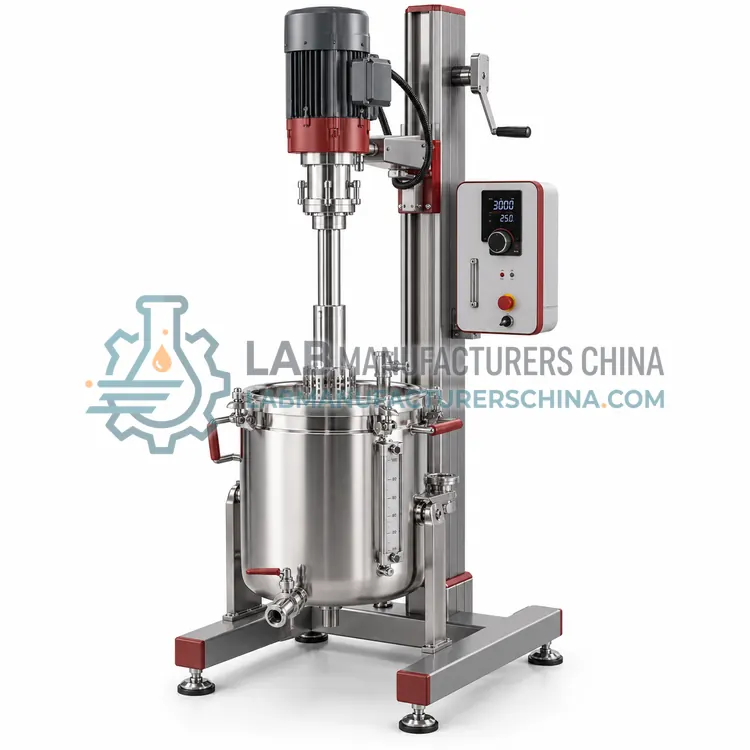
Choose a high-speed homogenizer by working volume, sample type, speed range and format. Handheld units are portable and suited to small volumes in tubes and beakers. Benchtop digital units provide precise speed, timer and torque feedback for reproducible protocols. Micro-volume models work with 0.1 to 10 mL samples in microtubes. Large floor-stand units process liters to tens of liters in pilot work. Disposable-probe systems prevent cross-contamination in clinical and molecular workflows. Consider the maximum speed and the generator options, and whether the probe materials such as 316L stainless steel or PTFE are compatible with your samples. Verify noise, vibration and safety features. Ask the supplier about tip speed, particle size results and cleaning procedures, and request a demonstration with your own sample where possible.
Full specifications
| Speed range | 500–30,000 rpm |
|---|---|
| Speed accuracy | ± 1 % of set value |
| Working volume | 1 mL–20 L |
| Motor power | 300–1,500 W |
| Tool diameter | 6–60 mm |
| Torque display | Yes, 0–100 N·cm |
| Timer | 1 s–99 h |
| Programs | Up to 10 stored |
| Data interface | USB or RS232 |
| Noise level | 65–80 dB(A) |
| Power supply | 100–240 V, 50/60 Hz |
Indicative values for this product class. Final specifications are confirmed on the quotation and in the calibration documents supplied with the instrument.
Applications
- Pharmaceutical suspensions
- Cosmetic emulsions
- Food homogenate preparation
- Method-driven quality control
- Research sample preparation
Key features
- Feedback-controlled speed from 500 to about 30,000 rpm
- Digital timer, speed and torque display for documentation
- Programmable profiles for standardized procedures
- Tools of 6–60 mm diameter for 1 mL to 20 L volumes
- Overload protection, soft start and splash guard
- USB or RS232 data output on selected models
Frequently asked questions about Benchtop Digital High-Speed Homogenizer
Feedback control keeps the set speed under changing load and viscosity, so each batch experiences the same shear conditions. This improves reproducibility and method transfer.
Torque increases with viscosity, so the display can indicate changes during emulsification or dissolution. It is useful for detecting overload and for documenting batch conditions.
With suitable tools, benchtop units handle 1 mL to about 20 L. Choose the tool diameter and motor power according to volume and viscosity.
A high-speed homogenizer uses a rotor-stator probe spinning at thousands of rpm to disrupt, emulsify and disperse samples in liquid. It is used in biology, pharmaceutical, food and chemistry laboratories for tissue disruption and emulsion preparation.
A rotor spins inside a fixed stator, drawing sample in and forcing it through narrow slots. The intense shear, turbulence and cavitation break tissue and reduce droplets to a few micrometers.
Soft tissue typically needs 10,000 to 20,000 rpm, while emulsions may need 10,000 to 26,000 rpm. Start low, increase gradually and use short bursts to limit heating.