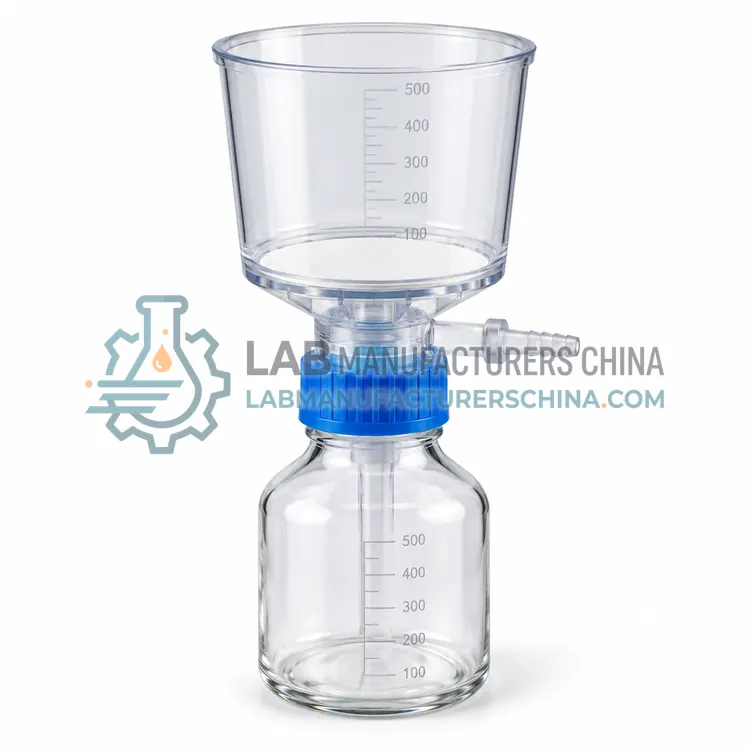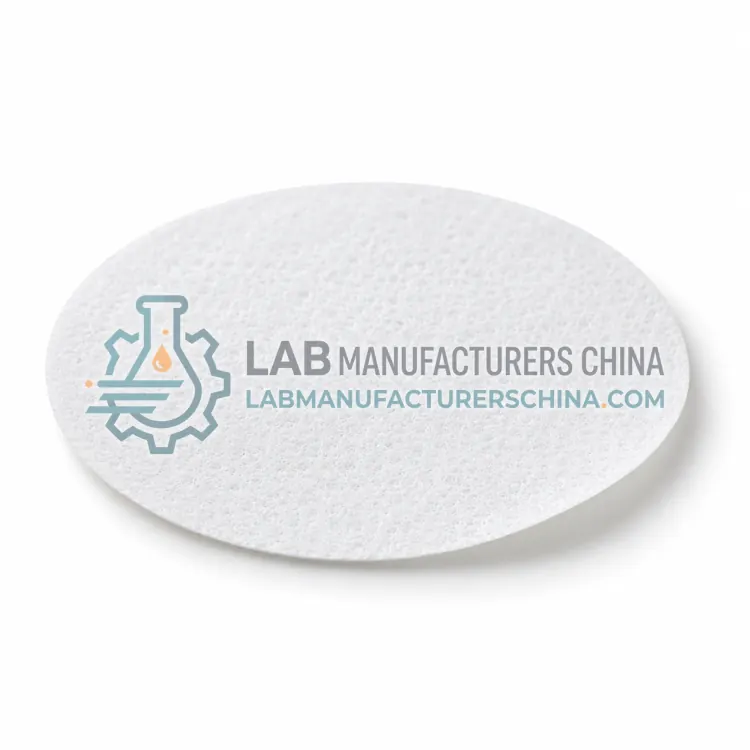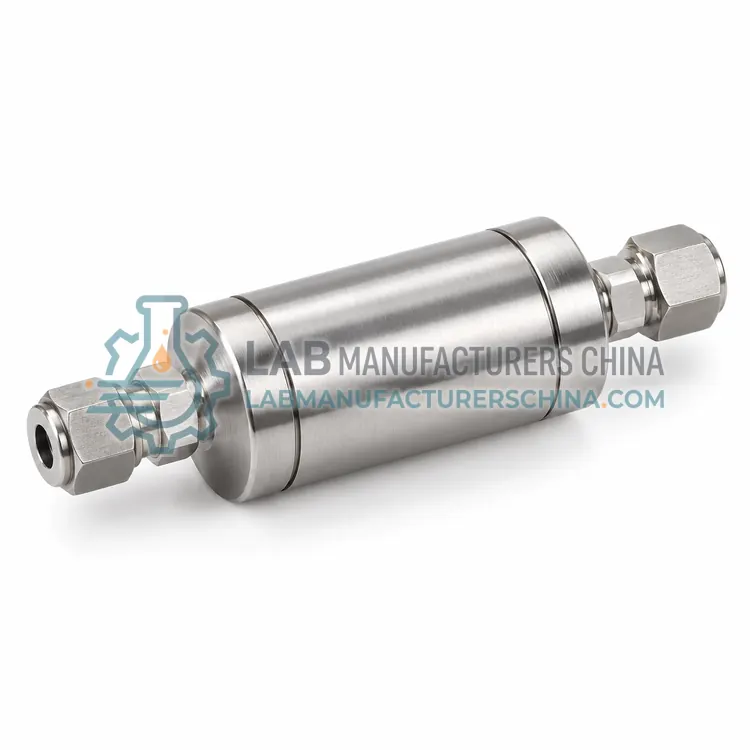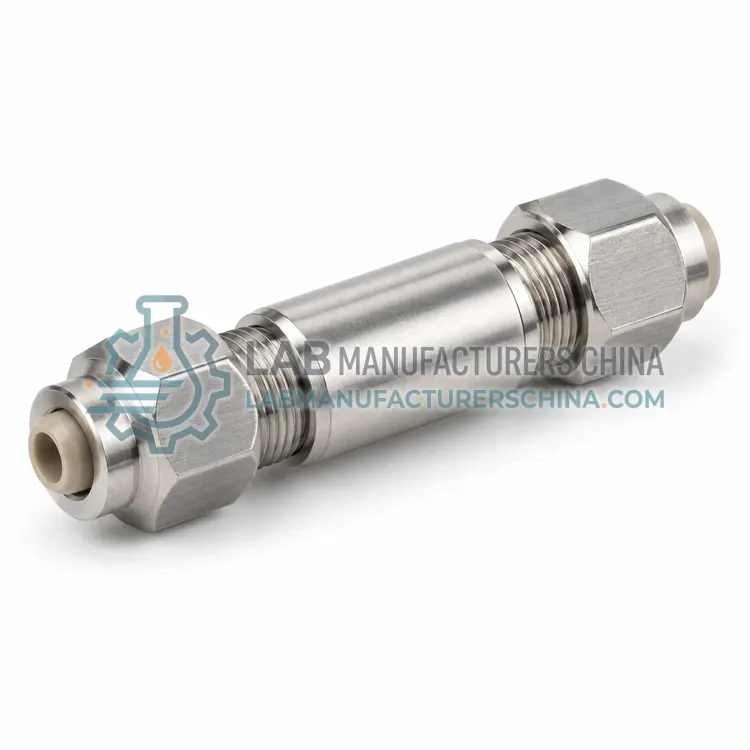
Centrifugal Filter Unit
离心过滤器
- SKU FIL-0004
- Filters
- CE (to be confirmed)
- ISO 9001 manufacturing (to be confirmed)
Price on request — FOB / CIF quoted per order
Prices depend on configuration, quantity and destination port.
Key specifications
| MWCO | 3–100 kDa |
|---|---|
| Receiver volume | 0.5–50 mL |
| Membrane | PES, regenerated cellulose |
| Max g force | Per device rating |
| Sterility | Optional |
| Low binding | Yes for protein work |
Request a quote Download brochure · to be provided
By Lab Manufacturers China Technical TeamLast reviewed Standards: USP <788> (particulate matter in injections), USP <665> (plastic components and systems), ISO 13485 (medical device quality management)
What is the Centrifugal Filter Unit?
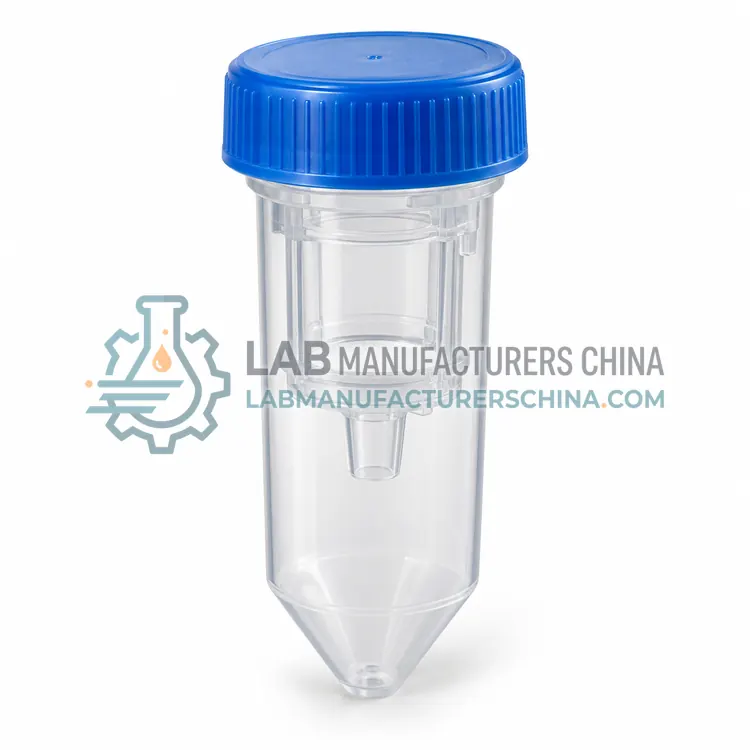
A centrifugal filter unit concentrates, purifies or buffer-exchanges small samples using centrifugation. It combines a membrane, a sealed receiver tube and a cap for volumes up to 50 mL spun in a rotor.
What is the Centrifugal Filter Unit?
A centrifugal filter unit concentrates, purifies or buffer-exchanges small samples using centrifugation. It combines a membrane, a sealed receiver tube and a cap for volumes up to 50 mL spun in a rotor.
Overview
The unit is a two-part device: an upper reservoir with a membrane at the base and a lower receiver tube, usually 0.5–50 mL, spun in a swinging bucket or fixed angle rotor. The membrane, with a defined molecular weight cut-off from 3 to 100 kDa or a pore size for sterile filtration, retains larger molecules or particles while solvent and small molecules pass into the receiver. Applications include concentrating protein solutions, exchanging buffer, removing low-molecular-weight contaminants and sterile filtration of small volumes. Devices are supplied sterile or non-sterile, with low-binding PES or regenerated cellulose membranes for protein work to reduce adsorption losses. Recovery from the membrane depends on the material and the protocol, and the device must not be spun above its rated g force or the membrane can rupture.
How does it work?
A laboratory filter separates particles from liquid by passing the liquid through a porous membrane with a defined pore size. Particles larger than the pore are retained on the surface or within the structure, while the filtrate passes through. Membrane material determines chemical compatibility and adsorption: PTFE is inert to most solvents and is used for organic mobile phases, PVDF suits aqueous and mixed phases, nylon binds proteins and is used where adsorption is not an issue, and cellulose acetate and PES are used for aqueous and biological solutions. Pore size of 0.45 µm removes most particulates, while 0.22 µm is used for sterilisation by filtration because it retains bacteria. The housing, whether polypropylene syringe filter, a bottle-top unit or a centrifugal device, provides the driving force and the connection. Extractables and hold-up volume are the main performance risks.
What are the key features?
- Upper reservoir with membrane and receiver tube
- MWCO 3–100 kDa
- Receiver volumes 0.5–50 mL
- Low-binding PES or RC membrane
- Sterile and non-sterile options
- Rotor and g rating limits
What are the technical specifications?
A typical centrifugal filter unit configuration offers MWCO of 3–100 kDa, receiver volume of 0.5–50 mL, membrane of PES, regenerated cellulose, max g force of Per device rating, sterility of Optional and low binding of Yes for protein work. Values are indicative of the product class; the exact figures for each configuration are confirmed on the quotation and the calibration documents supplied with the instrument.
Which applications is it used for?
The Centrifugal Filter Unit is used in protein concentration, buffer exchange, removal of small molecules and small-volume sterilisation. Across the wider Filters class, laboratories also deploy it for sample clean-up before HPLC, mobile phase filtration and sterilisation by filtration.
Which standards and certifications apply?
Relevant standards and methods include USP <788> (particulate matter in injections), USP <665> (plastic components and systems), ISO 13485 (medical device quality management), ISO 10993 (biological evaluation of medical devices), EN ISO 11607 (packaging for terminally sterilized devices) and USP <1664> (assessment of drug product leachables). Certification candidates for this model are CE and ISO 9001 manufacturing; each is to be confirmed for the specific configuration before shipment, and certificates are supplied only where they have been issued.
Pre-rinse the filter with the solvent or mobile phase when the method is sensitive, because membranes contain extractables such as wetting agents or oligomers that can appear as peaks, especially with LC-MS. Use a filter with a larger pore or a glass fibre prefilter for dirty samples, since a clogged 0.22 µm filter is a common cause of lost samples. Do not use the same filter for different samples if carry-over matters, and never filter a sterile solution into a non-sterile container. Check the pressure rating of syringe filters, because high pressure can burst the housing and release particles. Store filters in their packaging and respect expiry, especially for sterile units. Record lot numbers, since extractables and adsorption can vary between lots.
How do I select the right Centrifugal Filter Unit?
Choose the MWCO for the molecule you want to retain, and the low-binding membrane for protein work. Confirm the g rating and starting volume. RFQ: application, MWCO, volume, membrane and sterility. Provide application, MWCO and starting volume.
How does it compare with other Filters variants?
Choose the membrane by the solvent, the analyte and the purpose. Use PTFE for organic solvents and aggressive chemicals, PVDF or PES for aqueous and mixed phases, and cellulose acetate for aqueous solutions where low protein binding is wanted. Choose 0.22 µm for sterilisation or where microbes must be removed, and 0.45 µm for general particulate removal before chromatography. Match the format to the volume: syringe filters for 1–100 mL, bottle-top units for 100 mL to several litres, disc filters for vacuum or pressure holders, and centrifugal units for small volumes and concentration. Confirm the housing is compatible with the solvent, check hold-up volume for small samples, and ask for extractables data when the method is sensitive. Do not use a filter that adsorbs the analyte, and verify recovery with your compounds.
Full specifications
| MWCO | 3–100 kDa |
|---|---|
| Receiver volume | 0.5–50 mL |
| Membrane | PES, regenerated cellulose |
| Max g force | Per device rating |
| Sterility | Optional |
| Low binding | Yes for protein work |
| Operation time | Minutes per spin |
| Volume range | Up to 50 mL |
| Use | Concentration and exchange |
| Recovery | Material dependent |
Indicative values for this product class. Final specifications are confirmed on the quotation and in the calibration documents supplied with the instrument.
Applications
- Protein concentration
- Buffer exchange
- Removal of small molecules
- Small-volume sterilisation
Key features
- Upper reservoir with membrane and receiver tube
- MWCO 3–100 kDa
- Receiver volumes 0.5–50 mL
- Low-binding PES or RC membrane
- Sterile and non-sterile options
- Rotor and g rating limits
Frequently asked questions about Centrifugal Filter Unit
Pick a cut-off around one third to one half of the molecular weight of the molecule you want to retain so it stays in the upper chamber. A cut-off too close to the molecule size risks losses.
Proteins can adsorb to the membrane, especially if the wrong material is used. Low-binding PES or regenerated cellulose reduces adsorption, and pre-rinsing the membrane helps preserve recovery.
Exceeding the rated g force can rupture the membrane or deform the device, losing the sample. Follow the manufacturer's rotor and speed guidance, and use the correct adapter for the tube.
0.45 µm for general particulate removal before chromatography and 0.22 µm for sterilisation grade filtration or where bacteria must be removed. Dirty samples may need a glass fibre prefilter ahead of the membrane.
Membranes contain extractables such as wetting agents and oligomers that can elute into the first few millilitres and appear as peaks, especially in LC-MS. Rinsing with the mobile phase removes most of them.
PTFE is the usual choice because it is inert to most organic solvents and aggressive chemicals. PVDF and nylon are also used, but nylon can adsorb proteins and some analytes, so compatibility should be checked.
Related models