Deck-Mounted Eyewash Unit
台面式洗眼装置
- SKU EYS-0003
- Eyewash Stations
- CE (to be confirmed)
- ISO 9001 manufacturing (to be confirmed)
Price on request — FOB / CIF quoted per order
Prices depend on configuration, quantity and destination port.
Key specifications
| Type | Deck-mounted eyewash |
|---|---|
| Eyewash flow | 1.5–2 L/min per eye |
| Water temperature | 16–38 °C tepid |
| Head height | 800–1100 mm above floor |
| Valve type | Stay-open, push plate |
| Supply duration | ≥ 15 minutes |
Request a quote Download brochure · to be provided
By Lab Manufacturers China Technical TeamLast reviewed Standards: ANSI/ISEA Z358.1 (emergency eyewash and shower equipment), EN 15154-2 (eyewash for laboratories), EN 15154-1 (body showers for laboratories)
What is the Deck-Mounted Eyewash Unit?
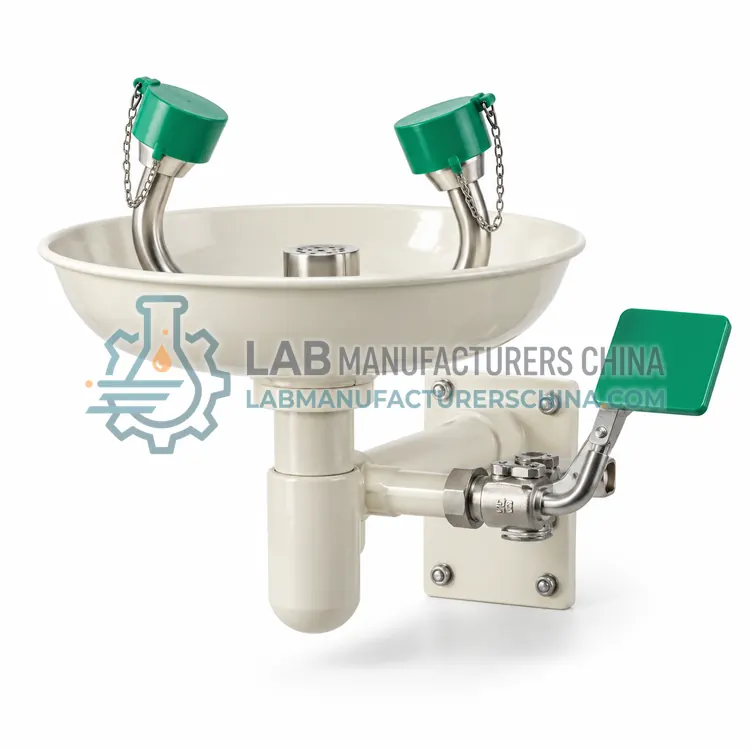
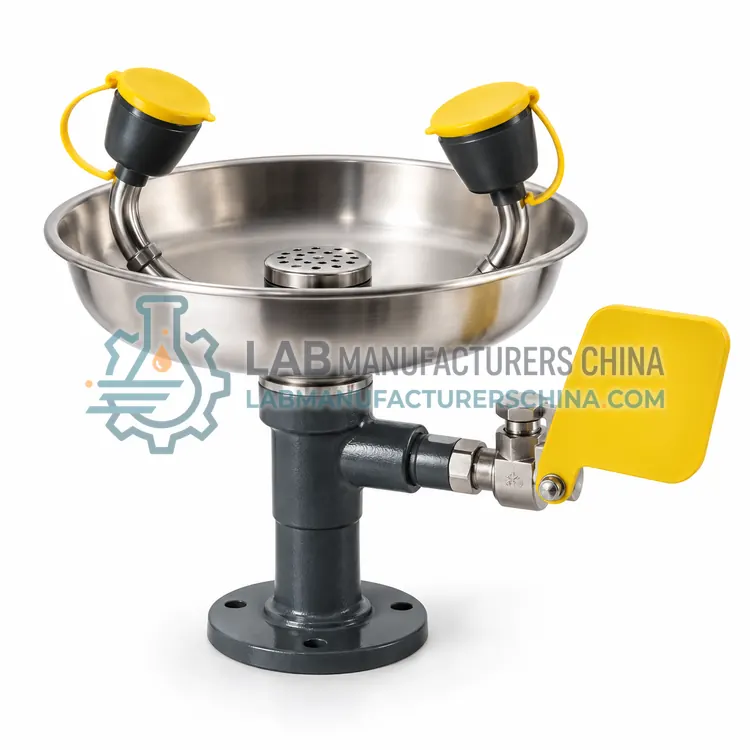
A deck-mounted eyewash unit fits onto a sink or bench and uses the existing water supply. It saves space where a sink is already within reach of the hazard and avoids new plumbing.
What is the Deck-Mounted Eyewash Unit?
A deck-mounted eyewash unit fits onto a sink or bench and uses the existing water supply. It saves space where a sink is already within reach of the hazard and avoids new plumbing.
Overview
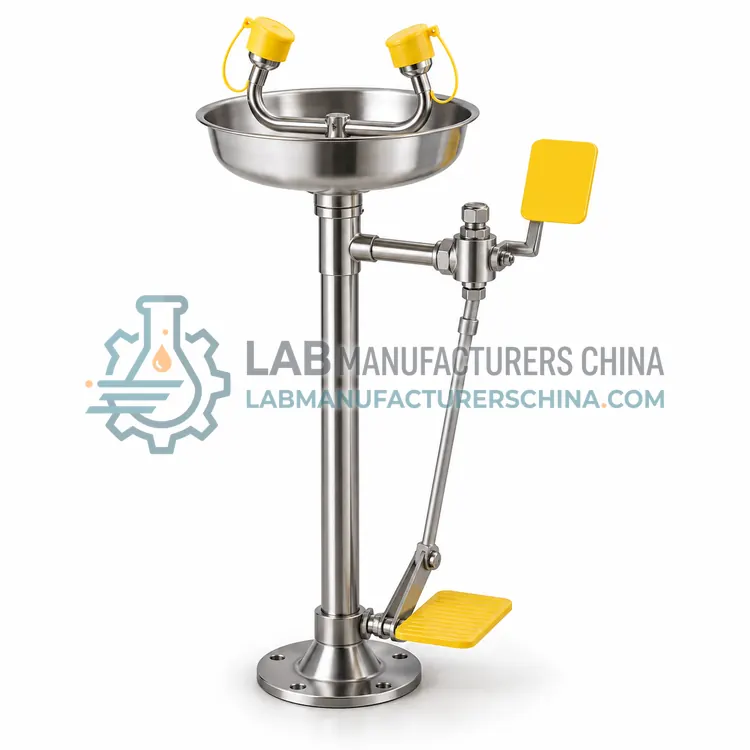
The unit replaces or adds to a tap and provides two aerated eyewash heads above a sink, with a stay-open valve operated by a push plate or handle. Flow is 1.5–2 L/min per eye at low pressure for at least 15 minutes, and the heads swing into position or are fixed above the bowl. Because it uses the sink supply, installation is simpler, but the unit must still meet flow and temperature requirements and be within 10 seconds of the hazard. Sinks used for the eyewash should be kept free of glassware and chemicals, and the supply should be tepid. Deck-mounted units are common in laboratories where a sink is the natural wet point, but a plumbed supply may be at mains temperature, so a tempering valve may be needed.
How does it work?
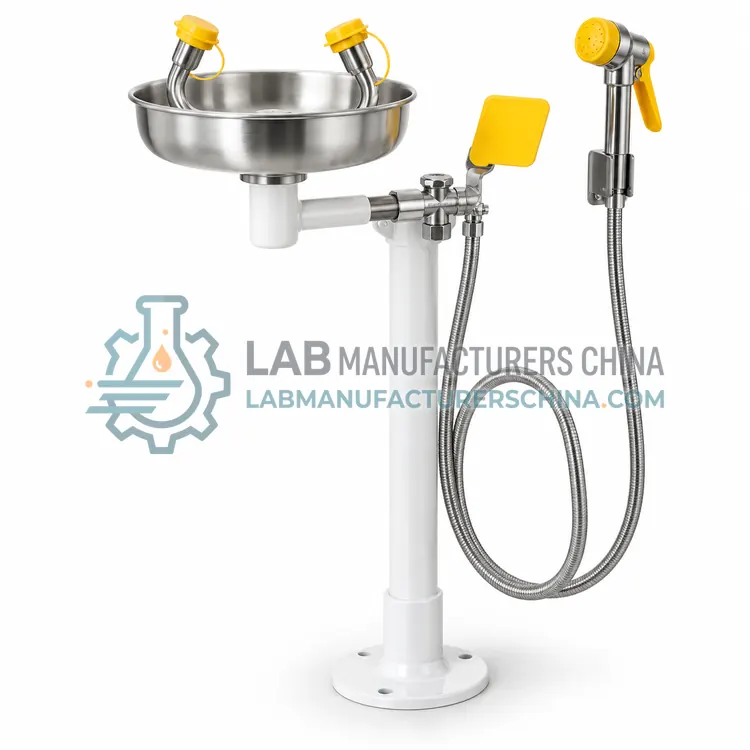
An eyewash station delivers two soft, aerated streams of tepid water that bathe the eyes so chemicals are diluted and rinsed away without driving them further into the eye. Water flows at about 1.5–2 L/min per eye at low pressure, and the heads are positioned so the user holds the eyelids open in the flow. Stay-open valves allow both hands to be used, and most units provide at least 15 minutes of flushing. Some stations add a face and body spray, and drench hoses reach areas that fixed heads cannot. Units are placed within 10 seconds of hazards, on the same level, with a clear approach and clear signage. Weekly activation flushes stagnant water, and annual inspection verifies flow, temperature, height and spray pattern against ANSI/ISEA Z358.1 or EN 15154-2.
What are the key features?
- Mounts on a sink deck or bench
- Two aerated heads above the bowl
- Flow 1.5–2 L/min per eye
- Stay-open valve with push plate
- Uses the existing water supply
- Tempering valve may be required
What are the technical specifications?
A typical deck-mounted eyewash unit configuration offers type of Deck-mounted eyewash, eyewash flow of 1.5–2 L/min per eye, water temperature of 16–38 °C tepid, head height of 800–1100 mm above floor, valve type of Stay-open, push plate and supply duration of ≥ 15 minutes. Values are indicative of the product class; the exact figures for each configuration are confirmed on the quotation and the calibration documents supplied with the instrument.
Which applications is it used for?
The Deck-Mounted Eyewash Unit is used in laboratories with sinks, histology and staining benches, small laboratories and teaching benches. Across the wider Eyewash Stations class, laboratories also deploy it for chemical and reagent handling, histology and staining areas and battery and electrolyte work.
Which standards and certifications apply?
Relevant standards and methods include ANSI/ISEA Z358.1 (emergency eyewash and shower equipment), EN 15154-2 (eyewash for laboratories), EN 15154-1 (body showers for laboratories), GB/T 38144 (emergency shower and eyewash), ISO 3864 (safety signage) and DIN 12926 (laboratory eyewash). Certification candidates for this model are CE and ISO 9001 manufacturing; each is to be confirmed for the specific configuration before shipment, and certificates are supplied only where they have been issued.
Perform a hazard assessment to confirm each station is reachable within 10 seconds, on the same level, and not blocked by equipment, doors or stored items. Activate every unit weekly to flush the line and confirm the valve stays open, and inspect annually for flow, temperature, spray pattern and head height. Maintain tepid water in the range of about 16–38 °C, since cold water discourages the required 15 minutes of flushing. Clean the heads and check for biofilm growth in stagnant lines, especially where use is rare. Provide clear signage, train staff on flushing technique including keeping the eyes open, and record all checks and maintenance for audit.
How do I select the right Deck-Mounted Eyewash Unit?
Choose a deck-mounted unit where a sink is already near the hazard and space is tight. Confirm flow, temperature and that the sink stays clear. RFQ: sink type, holes available, supply temperature, valve type and signage.
How does it compare with other Eyewash Stations variants?
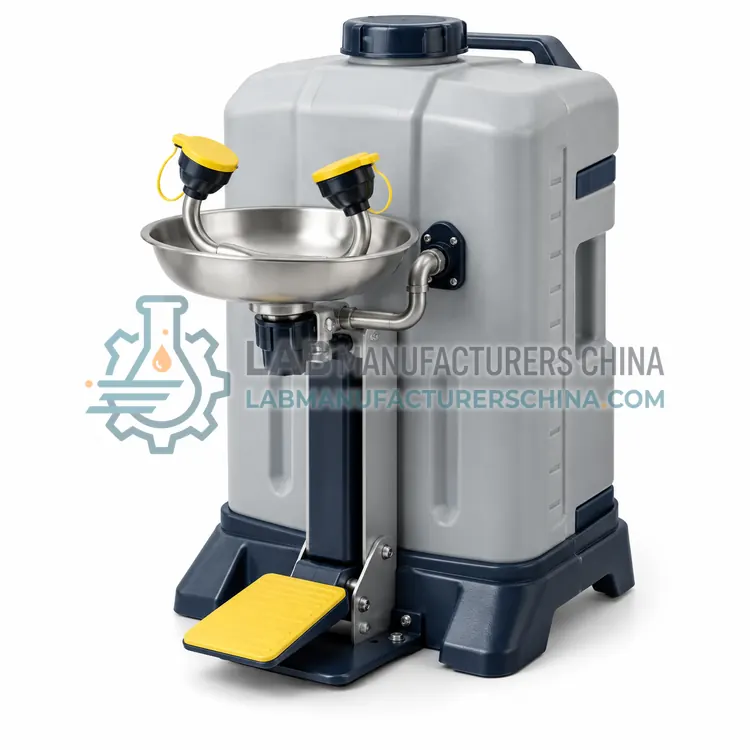
Choose wall-mounted units for general laboratories where a wall is available near the hazard, and pedestal units where there is no suitable wall or the floor space is free. Deck-mounted eyewashes fit onto a sink and save space but must still be within 10 seconds of the hazard. Drench hoses are used where the risk is localised, such as a specific transfer point, but they need a user who can hold the hose. Portable gravity-fed units suit field work, temporary installations or locations without a plumbed supply, though they have limited capacity. Confirm flow, tepid temperature, spray height and coverage, and that the approach is unobstructed. Verify that the unit suits the chemicals used, and provide signage and training.
Full specifications
| Type | Deck-mounted eyewash |
|---|---|
| Eyewash flow | 1.5–2 L/min per eye |
| Water temperature | 16–38 °C tepid |
| Head height | 800–1100 mm above floor |
| Valve type | Stay-open, push plate |
| Supply duration | ≥ 15 minutes |
| Mounting | Deck or bench, 1–2 holes |
| Heads | Swing-away or fixed |
| Material | Chrome-plated brass or ABS |
| Options | Tempering valve, dust covers |
Indicative values for this product class. Final specifications are confirmed on the quotation and in the calibration documents supplied with the instrument.
Applications
- Laboratories with sinks
- Histology and staining benches
- Small laboratories
- Teaching benches
Key features
- Mounts on a sink deck or bench
- Two aerated heads above the bowl
- Flow 1.5–2 L/min per eye
- Stay-open valve with push plate
- Uses the existing water supply
- Tempering valve may be required
Frequently asked questions about Deck-Mounted Eyewash Unit
It can, provided it delivers 1.5–2 L/min per eye for at least 15 minutes at tepid temperature and is within 10 seconds of the hazard. The sink must remain clear for use.
Because the piped supply may be at mains temperature, which can be too cold for comfortable flushing. A tempering valve raises the water to the tepid range of about 16–38 °C.
It should be kept clear and not used to store glassware, chemicals or waste, since the eyewash must be immediately usable. Mark the sink clearly as emergency equipment.
About 1.5–2 L/min per eye at low pressure, with aerated streams that do not hurt the eye. The unit must supply this for at least 15 minutes, delivered at tepid temperature.
Within 10 seconds' travel, about 15–20 m, on the same level and along an unobstructed path. The user should not have to pass through the hazard or open a door to reach it.
At least 15 minutes, starting within seconds of exposure, with the eyelids held open and the eyeballs rotated so the whole surface is rinsed. Seek medical advice after flushing begins.
Related models